
Waking Safaris

Waking Safaris
- Overview of Walking Safaris
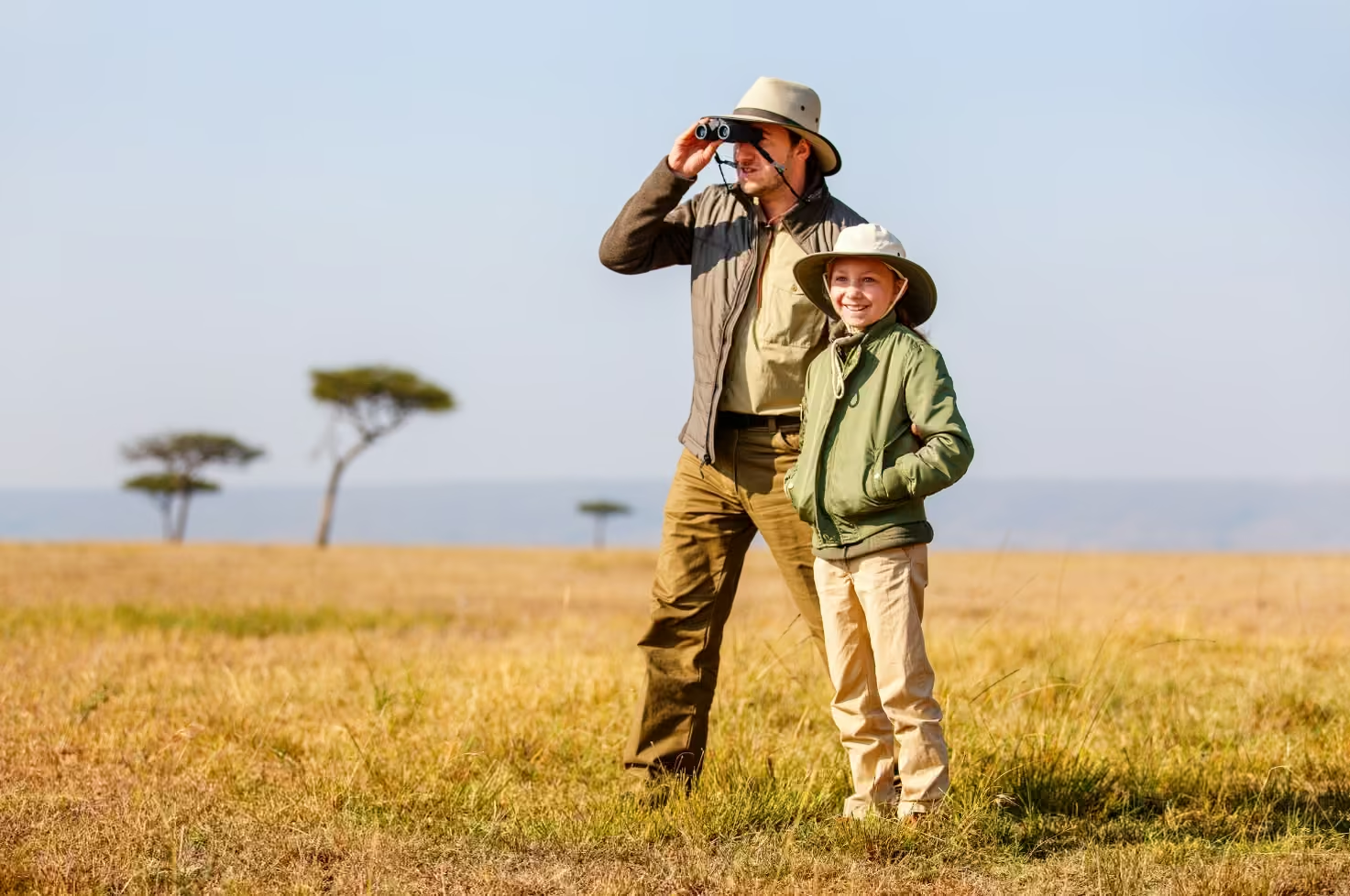
Walking Safaris in Tanzania offer travelers a more intimate and adventurous way to experience the African wilderness by exploring nature on foot rather than only from inside a safari vehicle. Guided by experienced professionals, a walking safari allows you to slow down, observe the landscape carefully and discover the smaller details that make Tanzania’s ecosystems so fascinating.
At Woodland Trek & Safaris, based in Arusha, Tanzania, we arrange carefully selected guided walking safari experiences in Tanzania for travelers who want to connect more deeply with nature. These walks are organized in suitable areas where the activity is permitted and are led by guides who understand wildlife behavior, tracking techniques, local plants, birdlife and bush safety.
Unlike a traditional game drive, the focus is not simply on finding large animals. A walking safari may introduce you to animal footprints, insects, medicinal plants, bird calls, bones, nests, feeding signs and natural trails that tell the hidden story of the wilderness.
The experience creates a heightened sense of awareness. Every movement in the grass, distant call and footprint in the soil becomes significant. This makes walking safaris ideal for travelers who want a more educational, immersive and authentic Tanzania safari experience.
- Common Locations for Walking Safaris
Tanzania offers several outstanding destinations where guided walking safaris can be enjoyed under appropriate regulations.
Popular areas for walking safaris in Tanzania include:
- Arusha National Park where guided walks take place through scenic landscapes beneath Mount Meru, with opportunities to observe giraffes, buffaloes, monkeys and numerous bird species.
- Tarangire Area where selected wildlife management areas and concessions offer walking experiences through acacia woodland, baobab country and open landscapes.
- Ngorongoro Highlands where walking routes pass through volcanic scenery, grasslands, crater landscapes and areas traditionally used by Maasai communities.
- Lake Manyara Area where selected walking activities can be combined with game drives, cultural tours and birdwatching.
- Nyerere National Park in southern Tanzania, widely known for classic wilderness walking experiences in vast and less crowded surroundings.
- Ruaha National Park where selected guided walks introduce travelers to remote landscapes, river ecosystems and diverse wildlife habitats.
- Private Wildlife Concessions and Community Areas where specialized walking safaris may be available as part of lodge and camp activities.
Each destination offers a different experience. Some are ideal for wildlife tracking, while others focus more strongly on scenery, birdlife, plants, geology and ecosystem interpretation.
- Duration and Accessibility
The duration of a Tanzania walking safari depends on the location, route and level of experience selected. Some walks are designed as short introductions, while others can become longer wilderness activities.
Typical options include:
- Short walks of 1 to 2 hours for travelers experiencing a walking safari for the first time.
- Morning walking safaris when temperatures are cooler and wildlife activity may be more noticeable.
- Half day walking experiences combining wildlife interpretation, photography and scenic exploration.
- Longer wilderness walks available in selected areas for more adventurous travelers.
Walking safaris generally require a reasonable level of mobility, although difficulty varies between routes. Some areas are relatively flat, while others may include rocky ground, hills or uneven natural trails.
The experience may be suitable for:
- Couples
- Solo travelers
- Small private groups
- Wildlife enthusiasts
- Birdwatchers
- Photographers
- Adventure travelers
- Experienced safari visitors
Age restrictions and participation requirements can vary according to the destination and local regulations.
Travelers should wear comfortable closed walking shoes, neutral colored clothing, sun protection and lightweight outdoor clothing. Drinking water is also essential, particularly in warmer areas.
- Daily Activity Breakdown
Your Walking Safari with Woodland Trek & Safaris normally begins in the early morning or late afternoon, when temperatures are generally more comfortable for exploring the bush on foot.
Before departure, your guide provides an important safety briefing explaining how the group should move, what to do during wildlife encounters and why following instructions is essential throughout the activity.
Once the walk begins, the pace is usually relaxed and observant. Instead of covering large distances, your guide focuses on interpreting the landscape and helping you understand the signs left behind by wildlife.
During the experience, you may enjoy:
- Tracking wildlife through footprints and other signs
- Learning about animal behavior
- Identifying native trees and plants
- Discovering traditional uses of selected plants
- Watching birds and listening to bird calls
- Observing insects and smaller wildlife
- Learning about animal feeding and movement patterns
- Exploring woodland, grassland and river environments
- Enjoying nature and landscape photography
- Learning about conservation and ecosystems
- Observing larger wildlife from appropriate distances where conditions allow
Your guide may stop frequently to explain tracks, droppings, plants, nests or animal behavior. These small discoveries make walking safaris especially rewarding because they reveal how much information is hidden within even a small area of wilderness.
At the end of the walk, you return to your safari vehicle, lodge or camp and continue with the rest of your Tanzania safari itinerary.
- Walk into the Wild with Woodland Trek & Safaris
A Walking Safari in Tanzania gives you a perspective that even the best safari vehicle cannot fully provide. Walking allows you to feel the landscape beneath your feet, notice the direction of the wind, hear distant wildlife and understand the wilderness through its smallest details.
At Woodland Trek & Safaris, we carefully include walking safaris within personalized Tanzania itineraries for travelers who want to experience nature in a deeper and more meaningful way. From our base in Arusha, Tanzania, we can combine walking experiences with traditional wildlife game drives, cultural activities, mountain adventures and photography safaris.
Highlights of Walking Safaris in Tanzania include:
- Exploring the African wilderness on foot
- Learning wildlife tracking techniques
- Discovering animal footprints and natural signs
- Observing birds, insects and smaller wildlife
- Learning about indigenous plants and ecosystems
- Experiencing nature from a ground level perspective
- Exploring scenic landscapes away from safari roads
- Enjoying excellent nature photography opportunities
- Combining walking with traditional Tanzania game drives
- Developing a deeper understanding of wildlife and conservation
With Woodland Trek & Safaris, every walking safari becomes a journey of discovery. A footprint becomes a story, a distant call becomes a clue, and every step brings you closer to the rhythm of Tanzania’s wild landscapes.
Practical Info
How to Book Your Safari
Preparing for a Safari
Preparing for Mountain Climbing
Visa in Tanzania
Conservation In Tanzania
Weather In Tanzania
Read Reviews

Follow us
- Woodland Trek Safaris Ltd
- @woodlandtrek_safari
- +255 682 956 506
- +255 769 950 057
- info@woodlandtrekandsafaris.com
- sales@woodlandtrekandsafaris.com
- Arusha, Tanzania
We Accept