Mount Kilimanjaro National Park

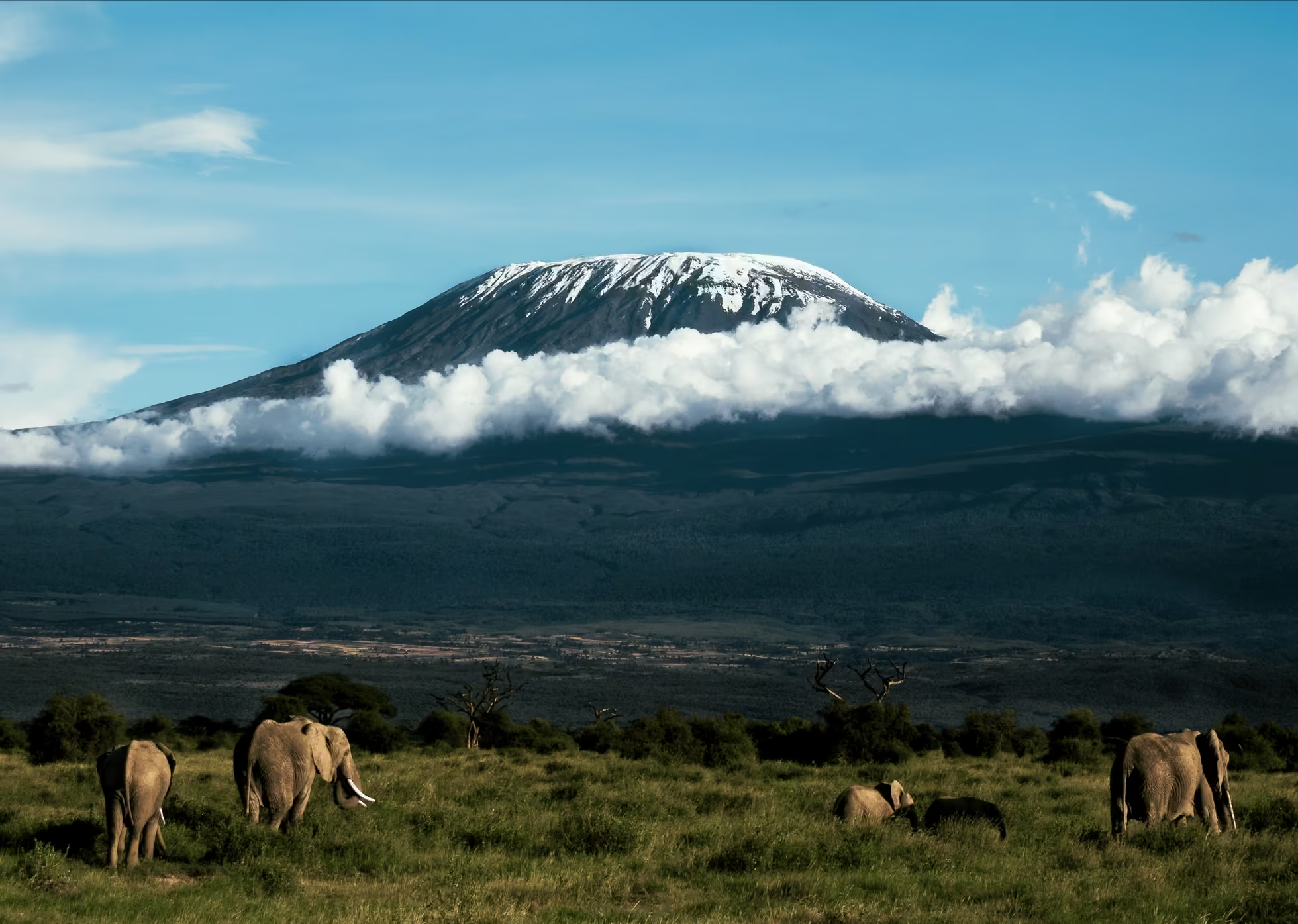
Mount Kilimanjaro National Park
Rising majestically above the plains of northern Tanzania, Mount Kilimanjaro National Park protects one of Africa’s most recognizable natural landmarks and the highest free standing mountain in the world. At approximately 5,895 metres above sea level, Mount Kilimanjaro is the highest mountain in Africa and one of the continent’s most celebrated trekking destinations.
Located in northeastern Tanzania near the town of Moshi and within easy reach of Arusha, the park attracts adventure travelers, hikers, photographers, nature lovers and climbers from around the world. Its extraordinary elevation creates a remarkable sequence of ecological zones, allowing visitors to move from cultivated foothills and tropical montane forest to heathland, alpine desert and finally the icy summit region.
Mount Kilimanjaro is composed of three major volcanic cones known as Kibo, Mawenzi and Shira. Kibo is the highest and contains Uhuru Peak, while Mawenzi creates a dramatic jagged skyline and Shira represents the remains of an older volcanic formation.
For many travelers, climbing Kilimanjaro is more than reaching a summit. It is a journey through changing landscapes, shifting climates and some of East Africa’s most remarkable mountain environments.
At Woodland Trek & Safaris, based in Arusha, Tanzania, we organize professionally planned Mount Kilimanjaro trekking tours, Kilimanjaro climbing packages, Tanzania mountain expeditions and customized adventure itineraries for travelers seeking a safe, memorable and carefully supported climb.
History of Mount Kilimanjaro National Park
Mount Kilimanjaro has been part of the cultural and natural heritage of northern Tanzania for generations.
The mountain has long held importance for communities living around its lower slopes, particularly the Chagga people, whose agricultural settlements have developed across the fertile foothills surrounding Kilimanjaro.
European explorers began documenting the mountain during the nineteenth century, and attempts to reach its summit followed. The first widely recognized successful ascent of the highest point occurred in 1889, marking an important moment in the history of African mountaineering.
As tourism and conservation awareness increased, greater protection was introduced to preserve the mountain’s forests, wildlife habitats and fragile alpine ecosystems.
The area was eventually designated as a national park, helping protect the upper mountain environment and surrounding natural landscapes.
Mount Kilimanjaro later gained international recognition as one of the world’s most significant natural sites due to its unique geography, ecological diversity and global importance.
Today, the mountain stands as one of Tanzania’s strongest tourism symbols and remains a dream destination for travelers searching for Africa trekking adventures, Tanzania hiking tours and Kilimanjaro summit expeditions.
Geography Size and Ecology of Mount Kilimanjaro National Park
Mount Kilimanjaro National Park covers approximately 1,688 square kilometres, protecting the mountain and surrounding ecological environments.
The park’s most remarkable characteristic is the dramatic change in vegetation and climate as altitude increases.
Climbers pass through several major ecological zones during a typical Kilimanjaro expedition.
Cultivated Foothills
The lower slopes surrounding the national park contain fertile agricultural land where local communities cultivate crops such as bananas, coffee, maize and vegetables.
These areas provide travelers with an introduction to the human landscape surrounding Kilimanjaro.
Montane Forest
The lower mountain is covered by beautiful tropical and montane forest.
This ecosystem receives relatively high rainfall and supports an impressive variety of plant and animal life.
Wildlife that may occur around the forest zone includes:
- Blue monkeys
- Black and white colobus monkeys
- Bushbucks
- Duikers
- Small antelope species
- Forest birds
- Elephants in some remote areas
- Buffaloes
Wildlife sightings during mountain climbs are not guaranteed, but the forests remain an important ecological component of the Kilimanjaro ecosystem.
Heath and Moorland
Above the forest, the vegetation gradually changes into heath and moorland.
This zone is characterized by open landscapes, giant heathers and distinctive high altitude plants.
Travelers often begin experiencing wider mountain views as vegetation becomes shorter and the terrain more exposed.
Alpine Desert
At higher elevations, conditions become increasingly dry, cold and harsh.
Vegetation becomes sparse and the landscape begins to resemble a high altitude desert.
Large temperature variations can occur between daytime and nighttime.
This zone is physically demanding for climbers because of decreasing oxygen levels and increasingly challenging altitude.
Arctic Summit Zone
The highest reaches of Kilimanjaro contain the summit environment surrounding Kibo and Uhuru Peak.
Temperatures can fall dramatically, especially during nighttime summit attempts.
Glaciers and ice formations remain among the most iconic features of the mountain, although their extent has reduced significantly over time.
The summit zone is extremely fragile and offers one of the most dramatic landscapes in Africa.
The Three Volcanic Cones of Kilimanjaro
Mount Kilimanjaro consists of three main volcanic formations.
Kibo
Kibo is the highest volcanic cone and contains Uhuru Peak at approximately 5,895 metres.
It is the main summit destination for climbers.
Kibo is considered dormant rather than completely extinct, although there is no current eruptive activity associated with normal trekking conditions.
Mawenzi
Mawenzi rises to approximately 5,149 metres and is recognizable by its rugged, sharply eroded appearance.
Unlike the gentler summit slopes of Kibo, Mawenzi is steep and technically challenging.
Standard Kilimanjaro trekking itineraries do not attempt Mawenzi’s summit.
Shira
Shira is the oldest and most heavily eroded volcanic cone.
Its collapsed structure forms the broad Shira Plateau, which is crossed by several popular Kilimanjaro trekking routes.
This area offers spectacular open scenery and excellent views toward Kibo.
Accessibility and How to Reach Mount Kilimanjaro National Park
Mount Kilimanjaro National Park is highly accessible from both Arusha and Moshi.
Most international travelers arrive through Kilimanjaro International Airport, located between Arusha and Moshi.
From the airport, travelers can continue by road to hotels in Moshi, Arusha or areas closer to the mountain.
The main trekking routes begin from different gates around the mountain.
Common Kilimanjaro entrance points include:
- Machame Gate
- Marangu Gate
- Londorossi Gate
- Lemosho starting areas
- Rongai Gate
- Umbwe Gate
Travel times vary according to the chosen climbing route and accommodation location.
Moshi is generally closer to several Kilimanjaro gates, while Arusha provides excellent connections for travelers combining their climb with a Serengeti safari, Ngorongoro safari, Tarangire safari or Zanzibar beach holiday.
At Woodland Trek & Safaris, we arrange airport transfers, accommodation, mountain guides, porters, meals, camping equipment and complete logistics for Kilimanjaro climbs beginning from Arusha, Moshi or Kilimanjaro International Airport.
Best Time to Visit Mount Kilimanjaro National Park
Mount Kilimanjaro can technically be climbed throughout the year, but weather conditions vary considerably by season.
The most popular climbing periods generally coincide with Tanzania’s drier months.
January to March
January through early March is often considered an excellent period for climbing Kilimanjaro.
Conditions can be relatively dry with good visibility.
These months can also attract fewer climbers than some peak periods later in the year.
June to October
The period from June through October is one of the most popular seasons for Kilimanjaro trekking.
Rainfall is generally lower, trail conditions are often more comfortable and skies can be clear.
July, August and September are particularly popular and can be busy on well known routes.
November
November normally brings short rains.
Climbing remains possible, but trails may become wetter and cloud cover may increase.
March to May
March through May generally corresponds with the main rainy season.
Heavy rainfall can make forest sections slippery and visibility may be reduced.
Some experienced travelers still climb during this period because there can be fewer people on the mountain, but the conditions are generally more challenging.
For most travelers, January to March and June to October provide favorable conditions for a Mount Kilimanjaro climb.
Main Kilimanjaro Climbing Routes
Choosing the right route is one of the most important decisions when planning a Kilimanjaro trekking expedition.
Different routes vary in scenery, difficulty, duration, traffic levels and acclimatization opportunities.
Machame Route
The Machame Route is one of the most popular Kilimanjaro routes.
It is known for beautiful scenery and a trekking profile that allows climbers to gain altitude gradually across several days.
The route passes through forest, moorland, alpine landscapes and iconic locations such as the Barranco Wall.
It is commonly completed in six or seven days, with longer itineraries generally providing improved acclimatization.
Lemosho Route
The Lemosho Route is widely regarded as one of the most scenic approaches to Kilimanjaro.
It begins on the western side of the mountain and crosses remote landscapes before joining sections of the Machame route.
Lemosho is particularly popular among travelers who want more time for acclimatization.
Seven and eight day itineraries are commonly recommended.
Marangu Route
The Marangu Route is famous for being the only standard Kilimanjaro route that uses mountain huts rather than tents for overnight accommodation.
It follows a relatively direct trail and is historically one of the best known Kilimanjaro climbing routes.
Although sometimes described as easier, the shorter standard itinerary can make altitude adjustment more difficult if climbers ascend too quickly.
Rongai Route
The Rongai Route approaches Kilimanjaro from the northern side near the Kenyan border.
It generally receives less rainfall than routes on the southern side and can provide a quieter trekking experience.
The landscape is different from the western and southern approaches, making Rongai attractive to travelers seeking a less crowded route.
Northern Circuit Route
The Northern Circuit is one of the longest standard Kilimanjaro routes.
Its extended itinerary allows climbers to circle around the northern slopes of the mountain before approaching the summit.
The route is valued for excellent acclimatization opportunities and lower traffic on certain sections.
Umbwe Route
The Umbwe Route is steep and physically demanding.
It gains elevation quickly and is generally recommended for experienced trekkers with strong fitness and proper acclimatization planning.
It is less suitable for first time high altitude climbers.
Common Activities in Mount Kilimanjaro National Park
Mount Kilimanjaro National Park is primarily associated with trekking, but visitors can experience several activities related to nature, culture and adventure.
Kilimanjaro Summit Climbing
The most famous activity is attempting to reach Uhuru Peak, the highest point in Africa.
Depending on the chosen route, climbs generally take between five and nine days.
Longer itineraries are often preferred because they provide more time for gradual acclimatization.
The summit attempt normally begins during the night, allowing climbers to reach the upper mountain around sunrise.
Standing at Uhuru Peak is an extraordinary achievement and one of the most memorable adventure experiences available in Tanzania.
Mountain Trekking
Not every visitor must reach the summit.
Shorter trekking experiences can allow travelers to explore the lower mountain environments while enjoying forests, scenery and fresh mountain air.
These excursions can be suitable for visitors who want to experience Kilimanjaro without committing to a full summit expedition.
Photography
Mount Kilimanjaro provides outstanding opportunities for landscape photography.
Photographers can capture:
- Sunrise above the clouds
- Kibo summit scenery
- Mawenzi Peak
- Shira Plateau
- Montane forest
- Alpine desert landscapes
- Glaciers
- Mountain camps
- Dramatic cloud formations
- Views toward the surrounding plains
Bird Watching
The forested lower slopes support numerous bird species.
Birdwatchers can enjoy opportunities to observe forest and highland birds before moving into higher ecological zones.
Cultural Experiences
Travelers staying around Moshi and the Kilimanjaro foothills can also explore local cultural experiences.
These may include visits to villages, coffee farms and community based tourism projects.
Such experiences provide insight into the traditions, agriculture and everyday life of communities living beneath Mount Kilimanjaro.
Preparing for a Kilimanjaro Climb
A successful Kilimanjaro climb requires preparation.
While Kilimanjaro does not normally require advanced technical mountaineering skills on the standard trekking routes, high altitude makes the climb physically and mentally demanding.
Important preparation considerations include:
- Cardiovascular fitness
- Regular hiking practice
- Proper trekking footwear
- Layered mountain clothing
- Waterproof clothing
- Warm summit clothing
- Good sleeping equipment
- Slow and steady pacing
- Proper hydration
- Adequate acclimatization
- Experienced mountain guides
One of the most important challenges on Kilimanjaro is altitude sickness.
As climbers ascend, the amount of available oxygen decreases.
Symptoms may include headaches, fatigue, reduced appetite, dizziness and nausea.
Proper acclimatization, slow ascent and guidance from experienced mountain professionals are extremely important.
Choosing a longer itinerary can improve the body’s opportunity to adjust gradually.
Accommodation Options Around Mount Kilimanjaro
Accommodation varies depending on whether travelers are staying before the climb, trekking on the mountain or resting after the expedition.
Hotels in Moshi
Moshi is one of the most popular bases for Kilimanjaro climbers.
The town offers accommodation ranging from affordable guesthouses to comfortable boutique hotels and luxury properties.
Staying in Moshi provides convenient access to many trekking gates.
Lodges Around Kilimanjaro
The surrounding countryside contains beautiful lodges with gardens, coffee plantations and views of Mount Kilimanjaro.
These properties are ideal for travelers who want peaceful surroundings before or after their climb.
Hotels in Arusha
Arusha is another popular base, particularly for travelers combining Kilimanjaro with a northern Tanzania safari.
The city offers a wide selection of luxury hotels, boutique lodges, midrange properties and budget accommodation.
Camping on the Mountain
Most Kilimanjaro routes use designated mountain camps.
Professional climbing crews carry tents, cooking equipment and other supplies between camps.
The camps provide a wilderness trekking experience surrounded by spectacular high altitude scenery.
Mountain Huts on the Marangu Route
The Marangu Route uses permanent mountain huts instead of camping tents.
This makes it unique among the main Kilimanjaro trekking routes.
Travelers sleep in shared hut accommodation at designated locations during the climb.
Combining Kilimanjaro With a Tanzania Safari
One of the greatest advantages of climbing Kilimanjaro in Tanzania is the opportunity to combine the expedition with some of Africa’s finest wildlife destinations.
After completing the mountain, travelers can continue toward:
- Arusha National Park
- Tarangire National Park
- Lake Manyara National Park
- Ngorongoro Conservation Area
- Serengeti National Park
A Kilimanjaro and Serengeti safari combination is particularly popular among international travelers.
After several demanding days on the mountain, relaxing inside a comfortable safari vehicle while watching lions, elephants, giraffes and wildebeest provides a wonderful contrast.
Travelers with additional time can also continue to Zanzibar Island for a beach holiday.
This creates a complete Tanzania experience combining mountain climbing, wildlife safari and tropical beach relaxation.
Why Visit Mount Kilimanjaro National Park
Mount Kilimanjaro is more than Africa’s highest mountain.
It is a destination where adventure, personal achievement and nature come together.
Travelers choose Kilimanjaro because it offers:
- The opportunity to reach Africa’s highest point
- One of the world’s greatest trekking adventures
- Multiple ecological zones within a single expedition
- Spectacular volcanic landscapes
- Views of glaciers and high altitude scenery
- Several climbing routes for different travel styles
- Excellent opportunities for photography
- Easy combination with Tanzania safaris
- Cultural experiences around the mountain
- A deeply rewarding physical and personal challenge
Whether you are an experienced trekker or attempting your first major high altitude adventure, Kilimanjaro offers an experience that remains unforgettable long after you descend.
Plan Your Mount Kilimanjaro Climb With Woodland Trek & Safaris
There are mountains you admire from a distance, and there are mountains that invite you to discover what you are capable of.
Mount Kilimanjaro is one of those mountains.
From the green forests at its base to the silent alpine desert and the final climb toward Uhuru Peak, every stage of the journey reveals a different side of Tanzania and a different part of yourself.
At Woodland Trek & Safaris, based in Arusha, Tanzania, we organize professionally planned Mount Kilimanjaro climbing tours, private Kilimanjaro trekking packages, group mountain expeditions, Tanzania hiking adventures and combined Kilimanjaro safari itineraries.
Our team can help you choose the most suitable route, number of trekking days, accommodation style and safari extension based on your fitness level, available time and travel expectations.
Whether you choose the scenic Lemosho Route, popular Machame Route, classic Marangu Route, peaceful Rongai Route or extended Northern Circuit, your journey is supported by experienced mountain professionals committed to safety, preparation and responsible trekking.
After the summit, your adventure does not have to end.
Continue across Tanzania toward the wildlife rich landscapes of Serengeti, Ngorongoro and Tarangire, or exchange mountain boots for warm Indian Ocean sand on Zanzibar.
Climb higher, travel deeper and experience Tanzania with Woodland Trek & Safaris, where your journey to the Roof of Africa begins with careful planning and ends with a story you will carry for a lifetime.
Practical Info
How to Book Your Safari
Preparing for a Safari
Preparing for Mountain Climbing
Visa in Tanzania
Conservation In Tanzania
Weather In Tanzania
Read Reviews

Follow us
- Woodland Trek Safaris Ltd
- @woodlandtrek_safari
- +255 682 956 506
- +255 769 950 057
- info@woodlandtrekandsafaris.com
- sales@woodlandtrekandsafaris.com
- Arusha, Tanzania
We Accept