
Mikumi National Park

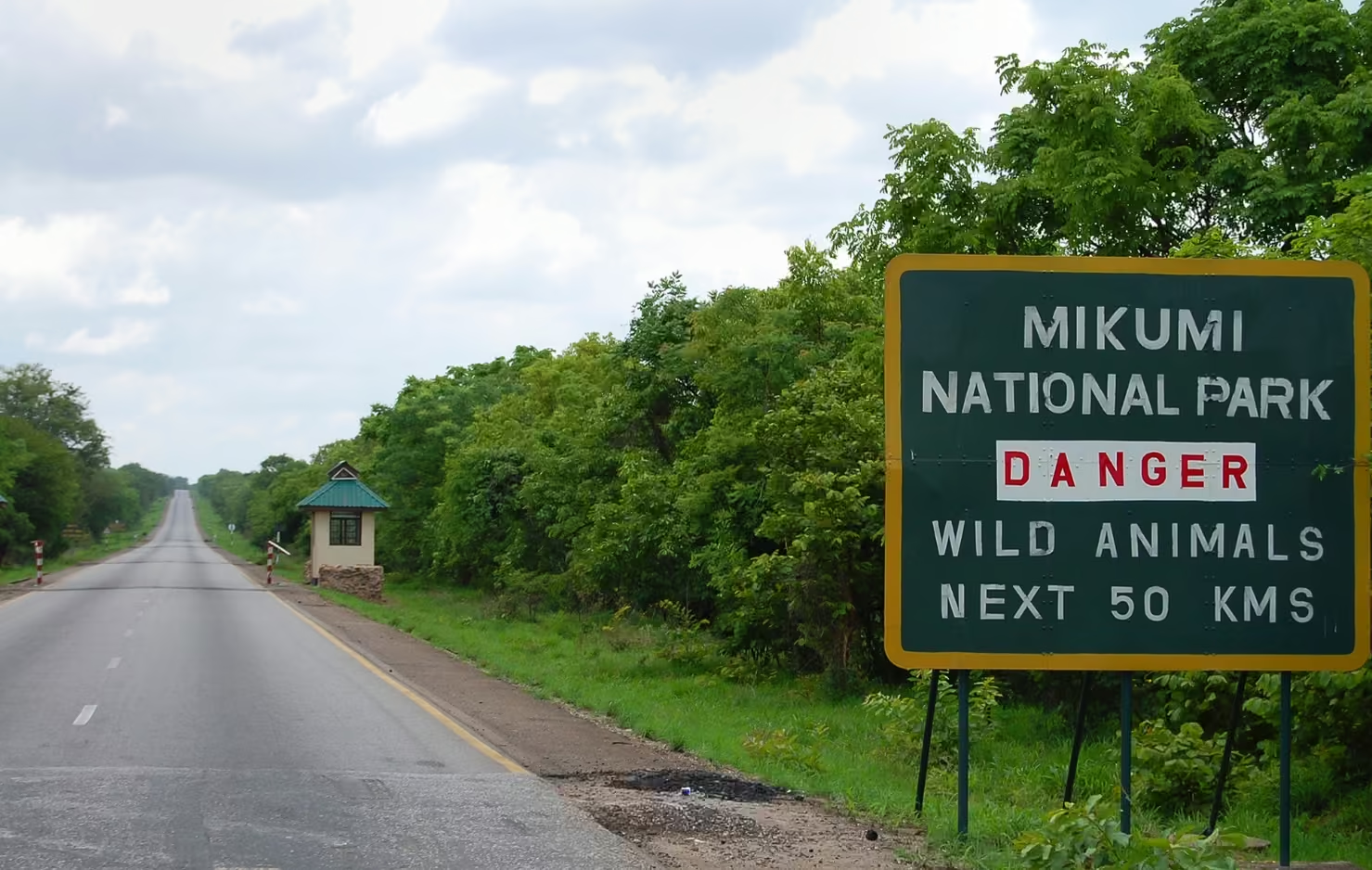
Mikumi National Park
Overview of Mikumi National Park
Set within the heart of southern Tanzania, Mikumi National Park is one of the country’s most accessible and rewarding wildlife destinations. Known for its broad open plains, impressive mountain backdrops and excellent opportunities to see classic African wildlife, Mikumi offers travelers a beautiful introduction to the Southern Tanzania safari circuit.
Covering approximately 3,230 square kilometres, Mikumi National Park forms part of a much larger wildlife ecosystem that connects with surrounding protected areas. Its landscapes include open grasslands, acacia woodland, miombo forest, seasonal wetlands, river systems and mountain scenery, creating habitats for an impressive variety of animals and birds.
The park is especially famous for its elephants, lions, giraffes, buffaloes, zebras, wildebeest, hippos, impalas and numerous antelope species. Leopards, spotted hyenas and wild dogs may also occur, although sightings depend on luck, season and wildlife movement.
One of Mikumi’s greatest advantages is accessibility. Its relative proximity to Dar es Salaam makes it one of the most convenient national parks for travelers looking for a short Tanzania safari, weekend wildlife safari, Southern Circuit adventure or combination trip with Nyerere National Park and the Udzungwa Mountains.
For travelers planning a Tanzania safari in 2026, Mikumi offers an excellent balance between wildlife viewing, road accessibility, diverse scenery and comparatively relaxed visitor numbers.
At Woodland Trek & Safaris, located in Arusha, Tanzania, we design personalized Mikumi National Park safaris, Southern Tanzania safari packages, private wildlife tours, family safaris, photographic safaris and customized Tanzania adventures based on your preferred travel style, schedule and budget.
History of Mikumi National Park
The landscape that forms modern Mikumi National Park has long been part of an important wildlife region in southern Tanzania.
Before the establishment of formal conservation boundaries, wildlife moved freely through the plains, woodlands and seasonal river systems that connect Mikumi with surrounding protected landscapes.
Mikumi was officially established as a national park in 1964.
Over time, additional areas were incorporated into the protected zone, helping create the larger national park visitors explore today.
Its location beside important wildlife corridors has made Mikumi ecologically significant beyond its own boundaries.
The park is connected to wider conservation landscapes associated with the Nyerere ecosystem and surrounding game reserves, allowing animals to move between different habitats according to rainfall, grazing conditions and water availability.
Historically, Mikumi received less international attention than Serengeti, Ngorongoro and other Northern Circuit destinations. However, improvements in road access and growing interest in Southern Tanzania safaris have increasingly positioned the park as an excellent destination for travelers seeking a quieter wildlife experience.
Today, Mikumi National Park plays an important role in protecting savannah, woodland and wetland ecosystems while supporting tourism and conservation in southern Tanzania.
Geography Size and Ecology of Mikumi National Park
Mikumi National Park covers approximately 3,230 square kilometres and lies between major mountain ranges and expansive wildlife landscapes.
Its geographical position creates an interesting transition between eastern African savannah and southern woodland ecosystems.
The park contains several distinct environments, each supporting different wildlife communities.
Mkata Floodplain
The Mkata Floodplain is one of the most important wildlife viewing areas in Mikumi National Park.
Its broad open grasslands are sometimes compared to the landscapes of the Serengeti because of their wide horizons and abundance of grazing animals.
During game drives, visitors may encounter:
- Zebras
- Wildebeest
- Buffaloes
- Giraffes
- Elephants
- Impalas
- Warthogs
- Lions following herbivore concentrations
The openness of the floodplain provides excellent visibility, making it one of the easiest areas for spotting wildlife.
During the dry season, animals often gather around remaining water sources, increasing the chances of memorable wildlife encounters.
Miombo Woodlands
Beyond the open plains, Mikumi contains extensive areas of miombo woodland.
This vegetation is typical of much of central and southern Africa and supports different wildlife from the open grasslands.
Animals that may occur within woodland areas include:
- Elephants
- Greater kudu
- Antelopes
- Leopards
- Wild dogs
- Baboons
- Numerous bird species
Miombo habitats can make wildlife more difficult to see because of thicker vegetation, but they provide an important ecological contrast within the park.
Mountains and Scenic Landscapes
Mikumi National Park is surrounded by beautiful mountain scenery.
The Uluguru Mountains rise to the northeast, while other highlands frame portions of the surrounding landscape.
These mountains create dramatic backdrops for wildlife photography and contribute to local rainfall patterns.
The park’s scenery is especially impressive during the green season, when grasslands become vivid and distant mountains are often visible beneath dramatic clouds.
Seasonal Rivers and Water Sources
Rivers, pools and seasonal wetlands are essential components of the Mikumi ecosystem.
During dry periods, water becomes increasingly concentrated, drawing animals toward permanent or semi permanent sources.
Hippos and crocodiles can be found in suitable pools and waterways.
Elephants, buffaloes, antelopes and predators may also gather nearby, particularly during the dry season.
Wildlife of Mikumi National Park
Mikumi supports an impressive collection of large African mammals and is particularly suitable for travelers visiting a national park for the first time.
Common wildlife includes:
- African elephants
- African lions
- African buffaloes
- Masai giraffes
- Zebras
- Wildebeest
- Hippos
- Warthogs
- Impalas
- Waterbucks
- Elands
- Greater kudu
- Baboons
- Vervet monkeys
- Spotted hyenas
- Leopards
- African wild dogs
Not every species is seen on every game drive, and wildlife encounters remain entirely natural.
The open nature of the Mkata Floodplain makes many common mammals relatively easy to locate during favorable conditions.
Lions and Other Predators
Lions are among the major attractions of Mikumi National Park.
They may be observed resting beneath trees, moving across open plains or following herds of grazing animals.
Visitors occasionally encounter lions resting on elevated surfaces or shaded areas during the heat of the day.
Leopards also occur within the park but are generally more difficult to locate because of their secretive nature.
Spotted hyenas are present, while African wild dogs may occasionally be encountered within the wider ecosystem.
Predator sightings depend on movement, season and luck, making each safari different.
Elephants
Elephants are commonly associated with Mikumi and may be encountered in open plains, woodland or near water sources.
Family groups can sometimes be seen crossing safari tracks or feeding among trees.
During dry periods, elephants may concentrate near reliable water, creating excellent opportunities for photography and behavior observation.
Hippos and Water Based Wildlife
Mikumi contains several locations where hippos can be observed.
Hippo pools are among the park’s popular wildlife stops and provide opportunities to watch these enormous animals resting in water during the day.
Birds, crocodiles and other wildlife may also gather around wetland areas.
These water environments create a welcome contrast to the dry savannah landscape.
Birdlife in Mikumi National Park
Mikumi is an excellent destination for bird watching safaris in Southern Tanzania.
Hundreds of bird species occur across its grasslands, wetlands and woodland environments.
Birdwatchers may encounter:
- Eagles
- Vultures
- Hornbills
- Kingfishers
- Bee eaters
- Storks
- Herons
- Egrets
- Secretary birds
- Bustards
- Waterbirds
- Woodland birds
- Seasonal migratory species
The wet season can be especially rewarding for birdwatching because migratory birds may arrive while resident species begin breeding.
For travelers interested in specialist birding, Mikumi combines well with Udzungwa Mountains National Park and Nyerere National Park.
Accessibility and How to Reach Mikumi National Park
Accessibility is one of Mikumi National Park’s greatest strengths.
The park can be reached by road or air and is particularly convenient for travelers starting their journey in Dar es Salaam.
Traveling by Road
Mikumi can generally be reached from Dar es Salaam by road in approximately four to six hours, depending on traffic, road conditions and the exact departure point.
The main road connecting Dar es Salaam with central and western Tanzania passes near and through parts of the wider Mikumi landscape.
This accessibility makes the park suitable for:
- Short safaris
- Weekend safari trips
- Private road safaris
- Family safari holidays
- Southern Circuit itineraries
- Travelers combining wildlife with Zanzibar
A reliable safari vehicle improves comfort and allows guests to explore the park effectively after arrival.
Traveling by Air
Scheduled and charter flights may also be arranged depending on the itinerary and current aviation services.
Flying can reduce travel time and is particularly suitable for:
- Luxury travelers
- Honeymooners
- Travelers with limited time
- Guests combining Mikumi with remote parks
- Visitors connecting from Zanzibar or other safari regions
At Woodland Trek & Safaris, we arrange complete travel logistics including road transfers, private safari vehicles, professional driver guides, domestic flight coordination and accommodation.
Connecting Mikumi With Other Destinations
Mikumi’s location makes it particularly useful within a wider Southern Tanzania itinerary.
It can be combined with:
- Nyerere National Park
- Ruaha National Park
- Udzungwa Mountains National Park
- Dar es Salaam
- Zanzibar
Travelers may also connect Southern Tanzania with Northern Circuit destinations such as Serengeti and Ngorongoro through customized fly in itineraries.
Best Time to Visit Mikumi National Park
Mikumi National Park can be visited throughout the year, but the wildlife experience changes between seasons.
For travelers primarily interested in classic game viewing, June through October is generally considered the strongest period.
June to October
This period normally corresponds with the dry season.
Vegetation becomes less dense and animals increasingly depend on permanent water sources.
Wildlife can therefore be easier to locate.
The dry season is particularly suitable for:
- Game drives
- Elephant viewing
- Lion sightings
- Wildlife photography
- Family safaris
- Short Tanzania safari itineraries
August, September and October can become particularly dry, creating excellent visibility across open plains.
November to February
Seasonal rains gradually transform the park.
Grasslands become greener and landscapes take on a fresh appearance.
Wildlife may disperse more widely because water becomes available throughout the ecosystem.
Birdlife can be excellent during this period.
Photographers often appreciate the green scenery, dramatic skies and softer natural light.
March to May
These months generally receive heavier rainfall.
The landscape becomes lush and beautiful.
Some tracks may become difficult after heavy storms, and wildlife can be more dispersed.
For visitors comfortable with occasional rain, this period can offer:
- Fewer safari vehicles
- Green landscapes
- Excellent birdwatching
- Atmospheric photography
- A quieter safari environment
For first time visitors focused mainly on wildlife, June to October is generally recommended.
For birdwatchers and travelers who appreciate greener scenery, the wet season offers another rewarding perspective.
Common Activities in Mikumi National Park
Mikumi provides several ways for travelers to experience its landscapes and wildlife.
Game Drives
Game drives are the main activity in Mikumi National Park.
Visitors explore open plains, woodland, river systems and wetlands using safari vehicles.
Morning drives are particularly rewarding because temperatures are cooler and many animals are active.
Afternoon drives can also provide excellent wildlife encounters, especially as animals move toward water before sunset.
A typical Mikumi game drive may include:
- Elephants crossing open plains
- Lions resting beneath acacia trees
- Giraffes browsing woodland edges
- Zebras and wildebeest grazing on the Mkata Floodplain
- Hippos resting in pools
- Buffaloes moving toward water
- Numerous antelope and bird species
Full day game drives provide more time to reach quieter sections of the park.
Wildlife Photography
Mikumi offers excellent opportunities for Tanzania wildlife photography.
Popular photographic subjects include:
- Lions
- Elephants
- Giraffes
- Zebra herds
- Hippos
- Buffaloes
- Mountain scenery
- Open savannah landscapes
- Sunrise and sunset
- Birdlife
Private safari vehicles provide photographers with greater flexibility regarding positioning and time spent at sightings.
Bird Watching
Birdwatching can easily be incorporated into standard game drives.
Travelers with specialist interests can dedicate additional time to wetland environments and woodland habitats.
The green season can be particularly rewarding for bird photography and identification.
Walking Safaris
Guided walking safaris may be available in designated areas according to current park regulations.
These experiences allow travelers to explore the ecosystem beyond the vehicle.
Walking safaris focus on details such as:
- Animal tracks
- Plants
- Insects
- Birdlife
- Wildlife signs
- Smaller mammals
- Ecosystem relationships
Walks should always be conducted with properly trained and authorized guides.
Scenic Experiences
Mikumi’s mountain backdrops and open landscapes make scenic viewing an important part of the safari.
Sunrise and late afternoon can provide spectacular views as light moves across the plains and surrounding hills.
These moments often become some of the most memorable parts of a Mikumi safari.
Cultural Experiences
Travelers may also combine Mikumi with community and cultural activities in surrounding areas.
Depending on the itinerary, experiences can provide insight into:
- Local agriculture
- Village life
- Traditional crafts
- Regional food
- Community conservation
Cultural visits can add meaningful human context to a wildlife focused journey.
Accommodation Options in Mikumi National Park
Mikumi offers several accommodation categories inside and around the national park.
The best choice depends on your travel budget, comfort expectations and overall itinerary.
Luxury Safari Lodges
Luxury lodges provide enhanced comfort and personalized service.
Facilities may include:
- Spacious rooms or suites
- Private verandas
- Swimming pools
- Fine dining
- Lounge areas
- Sundowner experiences
- Private safari arrangements
These properties are suitable for luxury Tanzania safaris, honeymoon trips and premium family holidays.
Tented Safari Camps
Tented camps provide a traditional African safari atmosphere.
Guests may stay in spacious canvas rooms equipped with proper beds, private bathrooms and comfortable furniture.
Tented accommodation allows travelers to hear the natural sounds of the wilderness while enjoying modern comforts.
Midrange Lodges
Midrange properties are popular among couples, groups and families.
Typical facilities may include:
- En suite rooms
- Restaurants
- Comfortable beds
- Electricity
- Lounge areas
- Swimming pools at selected properties
These lodges provide a good balance between affordability and comfort.
Budget Accommodation
Budget camps, guesthouses and simpler lodges are available around the greater Mikumi area.
These properties can be ideal for travelers who prioritize wildlife experiences while keeping accommodation costs moderate.
Camping
Camping provides a more adventurous safari experience.
Depending on the itinerary, travelers can stay at designated campsites with professional logistical support.
Camping safaris require appropriate equipment, food preparation and safety arrangements.
At Woodland Trek & Safaris, we recommend accommodation according to your preferred comfort level, budget, travel dates and safari route.
How Many Days Should You Spend in Mikumi National Park
Mikumi is suitable for both short and extended safaris.
Suggested durations include:
- 1 day for travelers with very limited time
- 1 night for a short safari from Dar es Salaam
- 2 nights for a comfortable wildlife experience
- 3 nights for relaxed game viewing and photography
- 3 to 4 nights when combining wildlife activities with surrounding attractions
A two night stay generally allows travelers to enjoy several game drives without rushing.
Photographers and wildlife enthusiasts may prefer additional time.
Important Travel Considerations
Travelers planning a Mikumi safari should consider several practical factors.
These include:
- Long road travel from Dar es Salaam depending on traffic
- Hot conditions during parts of the dry season
- Seasonal changes in wildlife distribution
- Muddy roads after heavy rainfall
- Wildlife sightings remaining natural and unpredictable
- The importance of using experienced guides
- Proper hydration and sun protection
- Seasonal accommodation availability
Mikumi is particularly suitable for travelers who want an accessible safari without sacrificing the sense of being surrounded by genuine African wilderness.
Why Visit Mikumi National Park
Mikumi combines accessibility, wildlife diversity and beautiful landscapes in a way that makes it one of Southern Tanzania’s most practical safari destinations.
Travelers choose Mikumi for:
- Excellent elephant viewing
- Lion sightings
- Giraffes and buffaloes
- Hippo pools
- Broad open plains
- Beautiful mountain scenery
- Rich birdlife
- Less crowded wildlife viewing
- Convenient access from Dar es Salaam
- Easy combination with Nyerere and Udzungwa
- Excellent short safari options
- Affordable safari possibilities
- Wildlife photography
Mikumi is especially attractive to travelers who have limited time but still want an authentic Tanzania safari.
It is equally rewarding as part of a longer Southern Circuit journey.
Combining Mikumi With Other Tanzania Destinations
Mikumi works perfectly as part of a broader Southern Tanzania safari itinerary.
One of the most rewarding combinations includes:
- Mikumi National Park
- Udzungwa Mountains National Park
- Ruaha National Park
- Nyerere National Park
Each destination offers something different.
Mikumi provides accessible classic game viewing.
Udzungwa offers rainforest, hiking and waterfalls.
Ruaha delivers remote wilderness, predators and baobab landscapes.
Nyerere adds huge river systems, boat safaris and another immense wildlife environment.
Mikumi can also be combined with Zanzibar, allowing travelers to enjoy several days of wildlife before relaxing beside the Indian Ocean.
This creates a complete Tanzania holiday combining safari, adventure, culture and beach relaxation.
Plan Your Mikumi Safari With Woodland Trek & Safaris
Sometimes an unforgettable safari does not require traveling to the furthest corner of Africa.
At Mikumi National Park, the wilderness opens before you in broad golden plains where elephants wander beneath distant mountains, giraffes move gracefully through woodland and lions rest quietly while herds of zebra and wildebeest graze nearby.
It is a landscape that feels wonderfully African yet remains surprisingly accessible.
At Woodland Trek & Safaris, based in Arusha, Tanzania, we create personalized Mikumi National Park safari packages, Southern Tanzania wildlife tours, private game drives, family safaris, honeymoon adventures, photographic safaris and customized Tanzania itineraries.
Whether you are looking for a short safari from Dar es Salaam, a longer Southern Circuit adventure or a combination of Mikumi, Ruaha, Nyerere and Zanzibar, our team can design a journey according to your travel dates, interests, preferred accommodation and budget.
Travel across open plains, follow elephant trails toward hidden waterholes and experience a quieter side of Tanzania where wildlife still defines every horizon.
Explore Mikumi National Park with Woodland Trek & Safaris and discover the beauty, accessibility and authentic wilderness of Southern Tanzania.
Practical Info
How to Book Your Safari
Preparing for a Safari
Preparing for Mountain Climbing
Visa in Tanzania
Conservation In Tanzania
Weather In Tanzania
Read Reviews

Follow us
- Woodland Trek Safaris Ltd
- @woodlandtrek_safari
- +255 682 956 506
- +255 769 950 057
- info@woodlandtrekandsafaris.com
- sales@woodlandtrekandsafaris.com
- Arusha, Tanzania
We Accept