Katavi National Park

Katavi National Park
Overview of Katavi National Park
Remote, vast and intensely wild, Katavi National Park is one of Tanzania’s most extraordinary safari destinations for travelers searching for true African wilderness far beyond the busier tourism routes. Located in western Tanzania, Katavi is known for its immense floodplains, large concentrations of buffaloes and elephants, powerful predator activity, seasonal rivers and some of the most dramatic hippo encounters anywhere in Africa.
Covering approximately 4,471 square kilometres, Katavi is one of Tanzania’s largest and least visited national parks. Its remoteness has helped preserve a sense of isolation that is increasingly rare in modern safari travel. Here, visitors can spend hours exploring expansive plains and river systems with very few other vehicles in sight.
For travelers planning a Tanzania safari in 2026, Katavi is an exceptional choice for remote wildlife safaris, Western Tanzania adventures, photographic safaris, fly in safaris, luxury wilderness experiences and off the beaten path African travel.
The park is especially famous for its dry season wildlife concentrations. As water sources shrink, enormous numbers of animals gather around remaining rivers, pools and wetlands. Buffalo herds may number in the hundreds, elephants move between floodplains and waterholes, lions patrol open grasslands, and hippos may crowd into rapidly diminishing pools.
At Woodland Trek & Safaris, based in Arusha, Tanzania, we organize carefully planned Katavi National Park safaris, Western Tanzania safari packages, fly in wildlife adventures, photographic expeditions and customized Tanzania itineraries for travelers who want to experience one of the wildest corners of the country.
History of Katavi National Park
The Katavi region has long been known for its wildlife, wetlands and seasonal river systems.
Before receiving national park status, the wider area was used by local communities and formed part of an important wildlife landscape in western Tanzania.
Conservation attention gradually increased as the ecological importance of the region became clearer. Katavi protected large floodplains, river systems and seasonal wetlands that supported huge numbers of large mammals.
The park was officially established in 1974.
Over time, the protected area was expanded, eventually reaching its current size of approximately 4,471 square kilometres.
Its remoteness has played an important role in shaping its tourism identity.
Unlike Serengeti and Ngorongoro, Katavi never developed into a high volume safari destination. Its limited infrastructure, distant location and relatively small number of camps have kept tourism numbers low.
Today, Katavi is considered one of Tanzania’s most important wilderness parks and one of the strongest destinations for travelers seeking low density safari tourism and authentic wildlife encounters.
Geography Size and Ecology of Katavi National Park
Katavi National Park covers approximately 4,471 square kilometres in western Tanzania.
Its landscape is shaped by wide floodplains, seasonal rivers, woodland, grassland, lakes and marshes.
These environments change dramatically between the wet and dry seasons.
During the rainy season, vast areas become flooded and wildlife disperses widely.
During the dry season, water becomes concentrated into rivers, channels and permanent pools, causing extraordinary numbers of animals to gather in smaller areas.
This seasonal contrast is one of the defining characteristics of Katavi.
Katuma River
The Katuma River is one of the park’s most important ecological features.
It provides a critical source of water for wildlife, particularly during the dry season.
As smaller water sources disappear, animals gather along the river and remaining pools.
Visitors may encounter:
- Hippos
- Crocodiles
- Elephants
- Buffaloes
- Antelopes
- Lions and other predators
The river system creates some of the most intense wildlife interactions in the park.
Katisunga Plain
The Katisunga Plain is one of Katavi’s most important wildlife viewing areas.
During the dry season, the broad open grasslands attract large concentrations of herbivores.
Travelers may see:
- Buffalo herds
- Elephants
- Zebras
- Topi
- Reedbuck
- Waterbuck
- Giraffes
- Predators following grazing animals
The openness of the plain provides excellent visibility and is especially rewarding for wildlife photography.
Chada Plain
The Chada Plain is another significant wildlife area within Katavi.
Like Katisunga, it becomes especially productive during the dry season.
Large mammals gather around remaining water sources, while predators take advantage of concentrated prey.
The surrounding woodland and open grasslands create dramatic safari scenery.
Lake Chada and Seasonal Wetlands
Seasonal lakes and wetlands form an important part of Katavi’s ecology.
During the wet season, these areas hold large amounts of water and support birds, fish and grazing wildlife.
As the dry season progresses, water levels fall dramatically.
This concentration process creates intense competition for water and can result in some of the most memorable wildlife scenes in Tanzania.
Woodland and Grassland Habitats
Katavi contains a mixture of open savannah and woodland.
Miombo woodland occurs in parts of the park, providing habitat for elephants, antelopes, leopards and numerous bird species.
Open grassland supports large herds of grazers and provides ideal hunting areas for lions.
The combination of woodland and floodplain creates impressive ecological diversity.
Wildlife of Katavi National Park
Katavi supports large populations of classic African wildlife.
Common species include:
- African elephants
- African buffaloes
- Lions
- Leopards
- Spotted hyenas
- Giraffes
- Zebras
- Topi
- Waterbuck
- Reedbuck
- Impala
- Warthogs
- Hippos
- Nile crocodiles
- Various smaller antelopes
The park’s isolation means wildlife encounters can often feel exceptionally private.
Buffalo Herds
Katavi is famous for its large buffalo herds.
During the dry season, groups may gather in very large numbers across open plains and near permanent water.
These concentrations attract lions and other predators.
Watching a lion pride follow a buffalo herd across the plains can be one of the most dramatic encounters of a Katavi safari.
Elephants
Elephants are also commonly seen throughout Katavi.
They gather near water sources during the dry season and may move in family groups across floodplains and woodland.
Their presence adds to the feeling of scale that defines the park.
Lions and Other Predators
Katavi supports strong predator populations.
Lions are frequently encountered around the main wildlife plains.
Their activity increases where buffaloes, zebras and antelopes concentrate.
Leopards occur within woodland and riverine habitats but are generally more difficult to locate.
Spotted hyenas are also present and play an important role in the ecosystem as both hunters and scavengers.
Hippos of Katavi
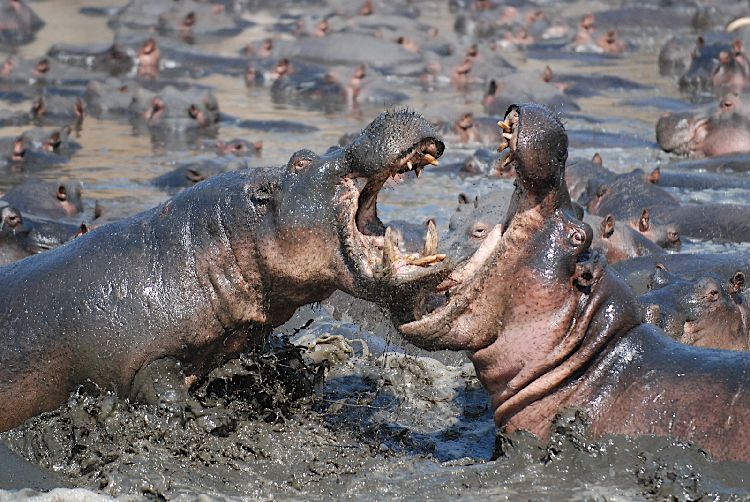
Katavi is especially famous for its remarkable hippo concentrations.
During the dry season, shrinking rivers and pools force large numbers of hippos into limited water.
Dozens or even hundreds may share the same pools under extreme conditions.
These concentrations create intense competition and dramatic social behavior.
Hippos can become highly territorial when space and water are limited.
This makes Katavi one of the most fascinating places in Africa for observing hippo behavior during the dry season.
Crocodiles
Large Nile crocodiles inhabit the river systems and remaining pools.
As water levels fall, crocodiles may gather in greater concentrations.
Some may dig into mud or remain almost completely submerged to conserve moisture.
Watching crocodiles and hippos sharing shrinking pools highlights how extreme dry season conditions can become.
Birdlife in Katavi National Park
Katavi is an excellent destination for bird watching in Western Tanzania.
The park’s wetlands, rivers, plains and woodlands support hundreds of bird species.
Birdwatchers may encounter:
- Fish eagles
- Storks
- Herons
- Egrets
- Kingfishers
- Hornbills
- Raptors
- Vultures
- Waterfowl
- Woodland species
- Migratory birds
The wet season is especially rewarding for birdlife as migratory species arrive and breeding activity increases.
Katavi can be combined with Mahale and Gombe for a highly diverse Western Tanzania birding safari.
Accessibility and How to Reach Katavi National Park
Katavi is one of Tanzania’s most remote safari destinations.
Its distance from major cities means that most international visitors reach the park by air.
Reaching Katavi by Air
Flying is generally the most convenient and practical option.
Scheduled or charter flights may connect Katavi with major tourism hubs depending on seasonal schedules.
Travelers may connect from:
- Arusha
- Dar es Salaam
- Other Western Tanzania safari destinations
- Selected bush airstrips
Fly in safaris save significant travel time and are especially popular with luxury travelers and photographers.
Reaching Katavi by Road
Overland travel is possible but requires considerable time and planning.
Road conditions can vary significantly.
A reliable 4×4 safari vehicle is essential.
Long distance road journeys are more suitable for adventurous travelers with flexible schedules.
Combining Katavi With Mahale
Katavi is commonly combined with Mahale Mountains National Park.
This is one of Tanzania’s most exclusive safari combinations.
Katavi provides:
- Lions
- Buffaloes
- Elephants
- Hippos
- Open plains
Mahale provides:
- Chimpanzees
- Forest trekking
- Lake Tanganyika
- Mountain scenery
Together, they create a remarkable contrast between classic wildlife safari and primate adventure.
At Woodland Trek & Safaris, we arrange flights, airstrip transfers, safari vehicles, accommodation and complete Western Tanzania logistics.
Best Time to Visit Katavi National Park
Katavi can be visited throughout much of the year, but the dry season from June to October is widely considered the strongest period for wildlife viewing.
June to October
As water becomes scarce, wildlife concentrates around rivers and pools.
This creates excellent opportunities to see:
- Large buffalo herds
- Elephant gatherings
- Lions
- Hippos
- Crocodiles
- Antelope concentrations
- Predator prey interactions
August, September and October can provide especially intense wildlife encounters.
The landscape becomes dry and dramatic, creating excellent conditions for photography.
November to February
Seasonal rains gradually transform the park.
The plains become greener and wildlife begins to disperse.
Birdlife improves significantly as migratory species arrive.
This period is excellent for:
- Bird watching
- Green season photography
- Lower visitor numbers
- Lush landscapes
March to May
This is generally the wettest period.
Large parts of the park may become flooded or difficult to access.
Some camps may close seasonally.
Wildlife disperses widely because water is abundant.
Although the scenery can be beautiful, travel logistics may become more complicated.
For first time visitors focused on major wildlife concentrations, July through October is generally the preferred period.
Common Activities in Katavi National Park
Katavi is primarily a classic wildlife safari destination, but its remoteness gives even familiar activities a more adventurous character.
Game Drives
Game drives are the main activity.
Visitors explore floodplains, river systems, woodland and open grasslands in search of wildlife.
Morning and late afternoon drives are particularly rewarding.
A typical Katavi game drive may reveal:
- Buffalo herds
- Lions
- Elephants
- Hippos
- Crocodiles
- Zebras
- Giraffes
- Antelopes
- Hyenas
Full day drives provide more time to explore remote areas.
Because visitor numbers are low, sightings can often be enjoyed with very few other vehicles.
Wildlife Photography
Katavi is exceptional for serious wildlife photography.
Popular subjects include:
- Large buffalo herds
- Lion prides
- Elephant families
- Hippo concentrations
- Crocodiles
- Open floodplains
- Dry season dust
- Dramatic sunsets
- Birdlife
Photographers benefit greatly from private safari vehicles because they provide flexibility and extra time at sightings.
Bird Watching
Birding can be incorporated into normal game drives.
The wet season is especially rewarding, but resident species are present throughout the year.
Specialist guides can help identify wetland and woodland birds.
Walking Safaris
Walking safaris may be available in selected areas under current park regulations and with appropriate professional guiding.
Walking allows travelers to experience details that are often missed from vehicles.
These may include:
- Animal tracks
- Plants
- Insects
- Bird calls
- Wildlife signs
- Ecosystem relationships
Walking in a remote park such as Katavi creates a powerful sense of wilderness.
Sundowners and Bush Experiences
Selected camps may arrange:
- Sundowner drinks
- Bush breakfasts
- Bush lunches
- Wilderness dining
These experiences allow travelers to enjoy the landscape beyond normal game drive hours while following safety regulations.
Stargazing
Katavi’s isolation and very limited artificial light make it excellent for stargazing.
Clear nights can reveal extraordinary views of the African sky.
For many visitors, sitting quietly outside camp beneath the stars becomes one of the most memorable moments of the safari.
Accommodation Options in Katavi National Park
Accommodation in Katavi is limited compared with major tourism parks.
This helps maintain the exclusive character of the destination.
Luxury Safari Camps
Luxury camps provide high levels of comfort in extremely remote settings.
Facilities may include:
- Spacious tents or suites
- En suite bathrooms
- Private verandas
- Fine dining
- Premium beverages
- Laundry service
- Personalized guiding
- Private safari options
These camps are particularly suitable for luxury Western Tanzania safaris and honeymoon adventures.
Tented Safari Camps
Tented camps offer a classic wilderness atmosphere.
Guests may stay in canvas rooms with proper beds, private bathrooms and views over plains or river systems.
The sounds of wildlife at night create an immersive safari experience.
Seasonal Camps
Some camps operate mainly during the dry season.
These properties are positioned to take advantage of strong wildlife concentrations.
Travelers should therefore book early if visiting during peak months.
Basic and Budget Options
Budget accommodation is more limited than in easily accessible parks.
The cost of operating in such a remote location means many Katavi properties fall into midrange or luxury categories.
Camping may be possible under professionally organized arrangements.
At Woodland Trek & Safaris, we recommend accommodation according to your travel dates, budget, preferred comfort level and overall Western Tanzania itinerary.
How Many Days Should You Spend in Katavi National Park
Because reaching Katavi requires significant travel, it is best not to rush the experience.
Suggested durations include:
- 2 nights for a short introduction
- 3 nights for strong wildlife viewing
- 4 nights for a relaxed safari
- 5 nights or more for photographers and serious wildlife enthusiasts
For most visitors, three to four nights provides a good balance.
Travelers combining Katavi with Mahale may spend several nights in each destination.
Important Travel Considerations
Katavi’s remoteness creates several practical considerations.
Travelers should prepare for:
- Limited flight schedules
- Few accommodation options
- Seasonal camp operations
- Very hot dry season conditions
- Long distances between wildlife areas
- Limited communication infrastructure
- Strong sun and dust
- The need for reliable professional guides
- Wildlife encounters that remain completely natural
Visitors should also understand that remoteness is part of the attraction.
Katavi is ideal for travelers who value wilderness, patience and exclusivity more than convenience.
Why Visit Katavi National Park
Katavi is one of Tanzania’s greatest destinations for travelers who want to leave the familiar safari trail behind.
Its wildlife concentrations can be extraordinary, yet the park remains remarkably quiet.
Travelers choose Katavi for:
- Large buffalo herds
- Intense dry season wildlife concentrations
- Hippo gatherings
- Crocodiles
- Lions
- Elephants
- Low visitor numbers
- Remote wilderness
- Excellent wildlife photography
- Beautiful floodplains
- Strong birdlife
- Exceptional Western Tanzania safari combinations
For experienced safari travelers, Katavi can feel like discovering Africa all over again.
Combining Katavi With Other Tanzania Destinations
Katavi is one of the major destinations within the Western Tanzania safari circuit.
Popular combinations include:
- Katavi and Mahale Mountains National Park
- Katavi and Gombe National Park
- Katavi and Lake Tanganyika
- Katavi and Northern Tanzania safari destinations
- Katavi and Zanzibar
The classic combination of Katavi and Mahale is especially rewarding.
Travelers can spend several days watching lions, buffaloes and elephants in Katavi before flying toward Mahale for chimpanzee trekking and Lake Tanganyika.
A longer itinerary may also include Gombe.
Travelers seeking a complete Tanzania journey can then add Serengeti, Ngorongoro or Zanzibar.
This creates a remarkable itinerary combining classic wildlife, primates, forests, remote wilderness, lakes and tropical beaches.
Plan Your Katavi Safari With Woodland Trek & Safaris
Some wildernesses impress through famous names.
Others impress because they still feel almost undiscovered.
Katavi National Park belongs to the second kind.
Here, buffaloes gather across immense floodplains, elephants move toward shrinking rivers and lions patrol landscapes where another safari vehicle may be nowhere in sight.
As the dry season intensifies, hippos crowd into the remaining pools, crocodiles wait along the muddy banks and the entire ecosystem seems to gather around the last reliable sources of water.
At Woodland Trek & Safaris, based in Arusha, Tanzania, we create personalized Katavi National Park safari packages, Western Tanzania fly in safaris, luxury wilderness tours, photographic expeditions, honeymoon adventures and customized African safari itineraries.
Whether you want to spend several days exploring Katavi’s floodplains, combine the park with Mahale’s chimpanzees or build a complete Western Tanzania journey including Gombe and Lake Tanganyika, our team can design the adventure according to your travel dates, interests, budget and preferred level of comfort.
Leave the crowded safari routes behind and travel into a landscape where wildlife, silence and open space still define every day.
Explore Katavi National Park with Woodland Trek & Safaris and discover one of Tanzania’s wildest and most unforgettable safari destinations.
Practical Info
How to Book Your Safari
Preparing for a Safari
Preparing for Mountain Climbing
Visa in Tanzania
Conservation In Tanzania
Weather In Tanzania
Read Reviews

Follow us
- Woodland Trek Safaris Ltd
- @woodlandtrek_safari
- +255 682 956 506
- +255 769 950 057
- info@woodlandtrekandsafaris.com
- sales@woodlandtrekandsafaris.com
- Arusha, Tanzania
We Accept