
Tour Type
Mountain Climbing
Tour Duration
9 Days 8 Nights
Min. No of Pax
1
Tour Price
Budget
On request
Mid-range
On request
Luxury
On request
The Price Includes
- Airport pickup from Kilimanjaro International Airport
- Departure airport transfer
- Two nights hotel accommodation in Arusha
- Bed and breakfast accommodation in Arusha
- Transportation from Arusha to Umbwe Gate
- Transportation from Mweka Gate to Arusha
- Kilimanjaro National Park entrance fees
- Kilimanjaro conservation fees
- Kilimanjaro camping fees
- Kilimanjaro rescue fees
- Applicable government taxes relating to the confirmed package
- Professional licensed Kilimanjaro guide
- Assistant mountain guides according to group size
- Professional mountain cook
- Porters for group equipment and permitted personal luggage
- Mountain crew salaries
- Mountain tents
- Dining tent
- Tables and chairs
- Cooking equipment
- Group camping equipment
- Three meals per day while trekking
- Safe drinking water during the mountain expedition
- Pre climb mountain briefing
- Personal trekking equipment inspection
- National park registration assistance
- Regular altitude and general health monitoring
- Basic mountain first aid equipment
- Summit preparation briefing
- Official summit certificate for eligible climbers
- Services clearly mentioned in the confirmed itinerary
The Price Excludes
- International flights
- Domestic flights unless specifically included
- Tanzania entry visa
- Passport expenses
- Travel insurance
- High altitude trekking insurance
- Emergency medical evacuation insurance beyond standard park rescue arrangements
- Personal trekking clothing
- Hiking boots
- Sleeping bag unless specifically included
- Trekking poles unless specifically included
- Personal daypack
- Personal duffel bag unless provided
- Personal medication
- Vaccinations
- Medical consultations
- Alcoholic beverages
- Bottled soft drinks
- Laundry services
- Telephone calls
- Internet expenses
- Personal shopping
- Souvenirs
- Optional tours in Arusha
- Tanzania safari extensions
- Zanzibar extensions
- Additional hotel nights not specifically included
- Meals in Arusha except those stated
- Tips for guides, assistant guides, cooks, and porters
- Expenses resulting from illness
- Costs caused by early mountain descent
- Expenses arising from flight delays or cancellations
- Personal equipment rental unless specifically included
- Services not clearly mentioned under Price Includes
Tour Overview
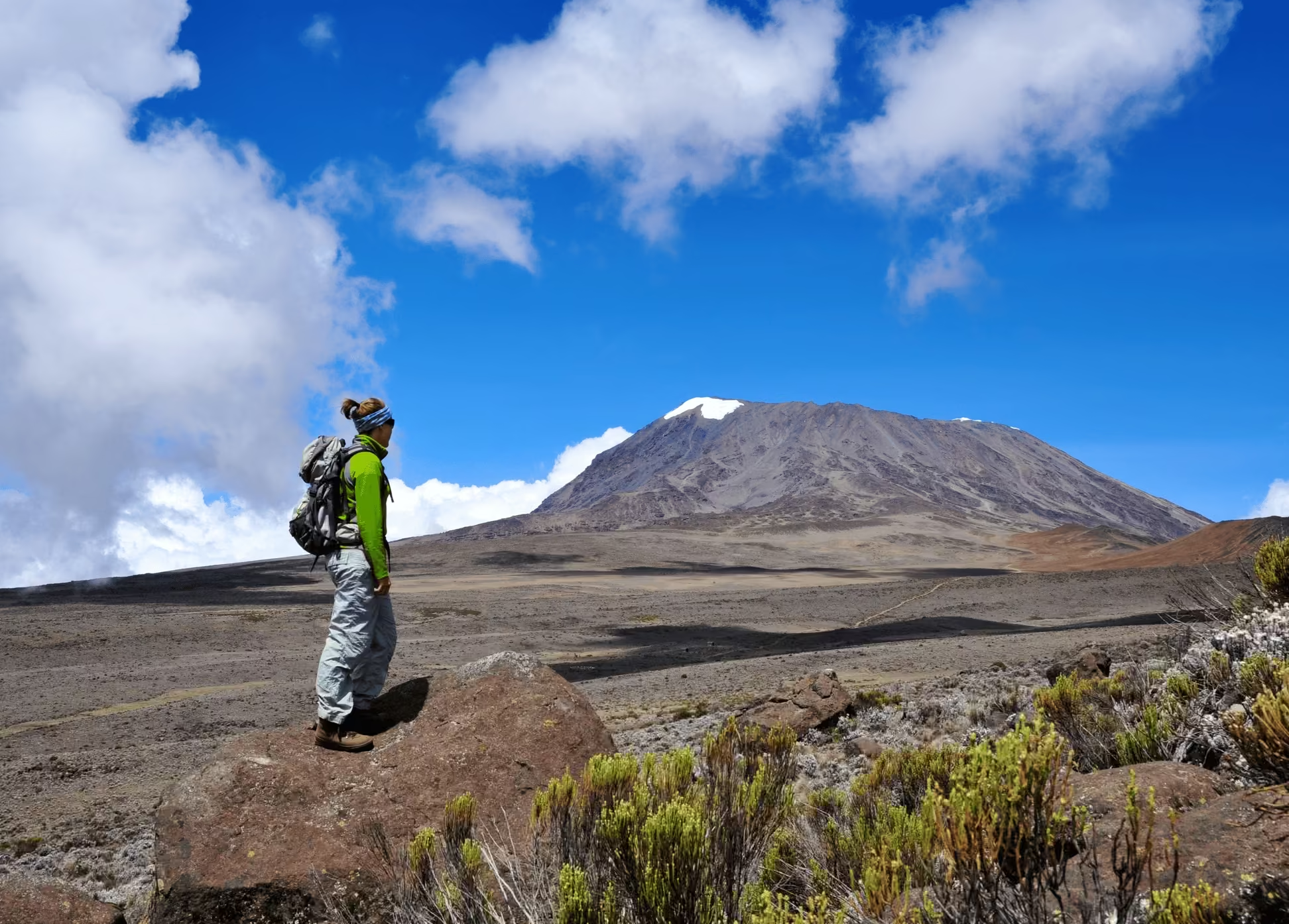
The 9 Days Umbwe Route with 7 Days Hiking is an adventurous, physically demanding, and visually spectacular Mount Kilimanjaro climbing itinerary designed for trekkers who want to experience one of the mountain’s most dramatic and less frequently used approaches. Beginning on the southern side of Mount Kilimanjaro, the Umbwe Route is known for its steep early ascent, narrow forest ridges, impressive views of the southern glaciers, dramatic volcanic landscapes, and direct approach toward the higher reaches of Africa’s tallest mountain.
Organized by Woodland Trek & Safaris, a professional Tanzania tour company based in Arusha, this itinerary combines one arrival day, seven mountain trekking days, and one departure day. The programme has been designed as an extended version of the classic Umbwe Route by including additional acclimatization time before the final summit approach.
The Umbwe Route has a reputation for being one of the steepest established trekking routes on Mount Kilimanjaro. Unlike routes that gain elevation more gradually during the first few days, Umbwe climbs quickly from the humid rainforest toward the higher moorland and alpine zones.
For this reason, the route is generally more suitable for experienced trekkers, physically fit travelers, climbers with previous high altitude experience, or adventurous visitors who understand the importance of disciplined pacing and acclimatization.
The route begins at Umbwe Gate, located on the southern side of Kilimanjaro National Park. After completing the required national park registration procedures, the trail enters a thick montane rainforest.
The early stages are immediately different from many other Kilimanjaro routes.
Rather than following broad open paths, the Umbwe trail often climbs through dense forest along steep ridges and narrow sections surrounded by lush vegetation.
Tall trees, moss covered branches, vines, ferns, wildflowers, and humid mountain air create a beautiful tropical environment.
The first mountain day leads toward Umbwe Cave Camp, situated at approximately 2,850 metres above sea level.
The climb is physically demanding because the trail gains substantial elevation over a relatively short distance.
The route continues the following day through increasingly open terrain toward Barranco Camp.
As the forest disappears, the landscape changes into heath, moorland, and eventually alpine environments.
Views toward the southern slopes of Kibo become increasingly impressive, and the famous Barranco Valley gradually comes into sight.
Barranco Camp is located beneath the dramatic Barranco Wall and close to Kilimanjaro’s southern glaciers.
This area is one of the most scenic locations on the entire mountain.
Because the Umbwe Route gains altitude rapidly during the first two trekking days, this extended itinerary includes an additional acclimatization day around Barranco.
Rather than continuing immediately toward Karanga, climbers spend another night at approximately 3,976 metres while completing a controlled acclimatization hike to a higher elevation before returning to camp.
This extra day gives the body additional time to adjust before moving deeper into the alpine environment.
No acclimatization programme can completely remove the risk of altitude sickness, but a slower schedule generally offers more time for the body to respond to reduced oxygen levels.
After the acclimatization day, the route continues over the Barranco Wall, one of the most iconic features on Mount Kilimanjaro.
The wall may look intimidating from the campsite, but the established trail follows a sequence of rocky steps, ledges, and scrambling sections.
Climbers occasionally use their hands for balance, but conventional technical climbing equipment is not normally required.
From the top of the wall, you continue through a beautiful landscape of ridges and valleys before descending into the Karanga Valley and climbing toward Karanga Camp.
Karanga sits at approximately 3,995 metres above sea level and provides another valuable night near 4,000 metres.
The route then continues toward Barafu Camp, the final high altitude base before the summit attempt.
Barafu is located at approximately 4,673 metres in the alpine desert.
The environment here is cold, barren, rocky, and exposed.
Vegetation is almost completely absent.
From Barafu, the broad slopes of Kibo rise above the campsite.
This is where the entire expedition becomes focused on summit preparation.
Your guide will inspect your summit clothing, headlamp, gloves, water system, trekking poles, snacks, and other essential equipment.
An early dinner is normally followed by several hours of rest before the summit attempt begins around midnight.
The summit night is the most difficult part of the climb.
You leave Barafu Camp in darkness and slowly climb through loose volcanic scree toward Stella Point, situated on the crater rim at approximately 5,756 metres.
The reduced oxygen, freezing temperatures, steep slopes, and physical fatigue make this a major test of endurance.
From Stella Point, the route follows the crater rim toward Uhuru Peak at 5,895 metres or 19,341 feet above sea level.
Uhuru Peak is the highest point on Mount Kilimanjaro, the highest point in Tanzania, and the highest point on the African continent.
Reaching the summit is an extraordinary achievement.
As daylight appears, glaciers, snowfields, volcanic formations, and the vast plains below may become visible.
For many climbers, this is the most emotional moment of the entire expedition.
After a brief celebration and summit photographs, you begin the long descent.
You return toward Barafu Camp, rest briefly, eat, and then continue down toward Mweka Camp.
The descent takes you rapidly from the arctic summit zone through alpine desert and toward vegetation again.
The final mountain day continues through the rainforest to Mweka Gate, where your Kilimanjaro expedition officially ends.
After completing national park exit procedures and receiving your summit certificate when eligible, you return to Arusha for a warm shower, comfortable hotel, and well deserved rest.
The Umbwe Route is not recommended simply because it is short or direct.
Its attraction lies in its wild character.
The trail feels more remote than some of Kilimanjaro’s busier routes.
The rainforest is steep and dramatic.
The approach to Barranco offers impressive southern mountain scenery.
The transition from forest to glacier views happens quickly.
For travelers who want a more physically demanding Kilimanjaro climbing experience, Umbwe can be deeply rewarding.
Mount Kilimanjaro itself is an enormous free standing volcanic massif rising from northern Tanzania.
It is formed by three principal volcanic cones known as Shira, Mawenzi, and Kibo.
Shira is the oldest and most eroded.
Mawenzi forms the dramatic jagged eastern summit.
Kibo is the highest cone and contains Uhuru Peak.
The Umbwe Route approaches Kibo from the south and eventually joins the southern circuit near Barranco.
This allows climbers to experience famous locations such as the Barranco Wall, Karanga Valley, Barafu Camp, Stella Point, and Uhuru Peak.
One of the great features of climbing Kilimanjaro is the extraordinary transition through several ecological zones.
During this expedition, you begin in tropical rainforest.
You then move through heath and moorland.
Higher still, vegetation becomes sparse as you enter the alpine desert.
Finally, the summit zone becomes an arctic environment of rock, ice, snow, freezing wind, and very thin air.
Few trekking experiences allow travelers to cross so many environmental zones within such a short geographical distance.
The Umbwe Route makes this transformation feel especially dramatic because elevation is gained rapidly during the first stages.
The rainforest feels warm and enclosed.
Only a relatively short time later, you are walking beneath glaciers and volcanic ridges.
This dramatic change is part of what gives Umbwe its adventurous reputation.
The route should be approached seriously.
Good physical preparation is strongly recommended.
Travelers should train through long distance walking, hill hiking, stair climbing, cardiovascular exercise, leg strengthening, and back to back trekking days.
Previous hiking experience is highly useful.
Previous exposure to altitude can also be valuable, although it does not guarantee successful acclimatization.
Mental preparation is equally important.
On Kilimanjaro, determination must be balanced with patience.
Your guides will frequently remind you to walk pole pole, meaning slowly, slowly in Swahili.
The phrase represents one of the most important principles of Kilimanjaro trekking.
Even on a steep trail such as Umbwe, rushing is never recommended.
A slow and steady rhythm helps conserve energy and supports altitude adaptation.
Throughout the expedition, you will be accompanied by an experienced mountain team from Woodland Trek & Safaris.
Depending on group size, the team may include a lead guide, assistant guides, mountain cooks, and porters.
The crew transports camping equipment, food, group supplies, and the permitted portion of personal luggage.
They also establish camps, prepare meals, collect water where available, and assist with the daily logistics of mountain life.
The guides monitor your progress and general condition throughout the climb.
They may ask about headaches, appetite, nausea, dizziness, sleep, energy, breathing, and other signs relating to altitude adaptation.
Honest communication is essential.
Summit success is an important goal, but safety always takes priority.
If a guide determines that continuing upward could create serious risk, descent may be required.
The mountain will always remain there for another attempt.
This 7 Day Umbwe Route is therefore ideal for adventurous climbers who want a challenging route but also value an additional acclimatization day before progressing toward the summit.
It offers a combination of steep rainforest trekking, quiet trails, Barranco scenery, high altitude camping, southern glacier views, the Barranco Wall, and the unforgettable journey to Uhuru Peak.
Whether you are climbing Kilimanjaro to fulfil a lifelong dream, celebrate a milestone, test your endurance, or experience one of Tanzania’s greatest adventure journeys, the Umbwe Route delivers a powerful mountain experience.
With Woodland Trek & Safaris, based in Arusha, Tanzania, your expedition is designed not simply around reaching the summit but around experiencing Kilimanjaro as a complete journey from rainforest to the Roof of Africa.
Essential Tour Information
- Total itinerary duration: 9 days and 8 nights
- Actual mountain hiking duration: 7 days and 6 nights
- Starting city: Arusha, Tanzania
- Mountain starting point: Umbwe Gate
- Mountain finishing point: Mweka Gate
- Route: Umbwe Route with southern circuit summit approach
- Highest point: Uhuru Peak at 5,895 metres or 19,341 feet
- Highest sleeping point: Barafu Camp at approximately 4,673 metres
- Approximate total trekking distance: 55 to 65 kilometres depending on acclimatization walks and campsite trail variations
- Difficulty level: Very challenging high altitude trek
- Technical climbing: Conventional technical mountaineering is not normally required
- Recommended fitness: Very good physical fitness
- Recommended experience: Previous hiking experience strongly recommended
- Accommodation on the mountain: Tented camping
- Accommodation before and after the mountain: Hotel in Arusha
- Main ecological zones: Rainforest, heath, moorland, alpine desert, and arctic summit environment
- Major landmarks: Umbwe Forest, Umbwe Cave, Barranco Camp, Barranco Wall, Karanga Valley, Barafu Camp, Stella Point, and Uhuru Peak
- Main summit approach: Barafu Camp through Stella Point
- Main descent route: Mweka Trail
- Best suited for: Fit and adventurous climbers seeking a steeper and quieter Kilimanjaro route
Why Choose the 7 Day Umbwe Route
A Wild and Less Crowded Beginning
The Umbwe Route is generally quieter than Kilimanjaro’s most popular routes.
The early forest sections often feel remote and adventurous.
This makes the route particularly appealing to trekkers who value solitude and wilderness.
Dramatic and Steep Trail
Umbwe is known for gaining elevation quickly.
The path climbs steeply through rainforest ridges and narrow sections, creating a physically demanding but visually rewarding start to the expedition.
Spectacular Southern Kilimanjaro Scenery
The route approaches Kilimanjaro from the south and provides dramatic views of the southern glaciers, Barranco Valley, Barranco Wall, and Kibo.
Added Acclimatization Day
This Woodland Trek & Safaris itinerary includes an additional acclimatization day around Barranco.
This creates a more gradual schedule than a faster Umbwe itinerary and gives climbers more time to adjust before continuing toward Karanga and Barafu.
Barranco Wall Experience
Climbers complete the famous Barranco Wall after spending two nights in the Barranco area.
The climb provides one of the most exciting experiences on Kilimanjaro.
Diverse Landscapes
The route moves rapidly through rainforest, moorland, volcanic valleys, alpine desert, and the summit zone.
Strong Sense of Adventure
For climbers who want something more physically demanding than the standard routes, Umbwe offers one of Kilimanjaro’s strongest wilderness experiences.
Day To day
DAY 1 ARRIVAL AT KILIMANJARO INTERNATIONAL AIRPORT AND TRANSFER TO ARUSHA
Location: Kilimanjaro International Airport and Arusha
Approximate driving distance: 50 to 55 kilometres
Approximate driving time: 1 to 1.5 hours
Elevation in Arusha: Approximately 1,400 metres or 4,593 feet
Major activities: Airport pickup, hotel transfer, mountain briefing, trekking equipment inspection, and expedition preparation
Welcome to Tanzania and the beginning of your 9 Days Umbwe Route Kilimanjaro climbing adventure.
After landing at Kilimanjaro International Airport, you will complete immigration and luggage collection before meeting a representative from Woodland Trek & Safaris.
You then travel toward Arusha, one of northern Tanzania’s major tourism centres and an important base for Kilimanjaro expeditions.
The airport transfer usually takes approximately one to one and a half hours, depending on traffic and your hotel location.
The road passes through open countryside, local settlements, farms, and areas lying between Mount Kilimanjaro and Mount Meru.
When skies are clear, Mount Meru may rise prominently above Arusha.
After checking into your hotel, you will have time to rest and recover from your international journey.
Later, you meet your professional Kilimanjaro guide for a detailed pre climb briefing.
Because the Umbwe Route is particularly steep during the opening stages, your guide will explain the importance of controlled pacing, hydration, acclimatization, and honest communication throughout the trek.
The briefing normally covers:
- Daily trekking stages
- Expected distances and hiking times
- Mountain elevations
- Campsite procedures
- Porter luggage regulations
- Meal arrangements
- Weather conditions
- Altitude awareness
- Summit preparation
- Emergency procedures
Your personal trekking equipment will also be inspected.
The guide may check your hiking boots, waterproof clothing, thermal layers, warm jacket, gloves, sleeping bag, headlamp, trekking poles, sunglasses, hydration system, and personal medication.
If essential items are missing, arrangements may be made to rent or purchase suitable equipment in Arusha.
The remainder of the evening should be used to organise your luggage.
Your main duffel bag will normally be carried by a porter within the permitted weight limit, while you carry your own daypack.
Items not needed on the mountain can usually remain safely stored at your hotel.
Hydrate properly, eat a balanced meal, and try to sleep early.
Tomorrow, the steep wilderness of the Umbwe Route begins.
Extra Activities in Arusha
- Explore Arusha city centre
- Visit a local craft market
- Visit the Cultural Heritage Centre
- Enjoy an optional coffee experience
- Purchase or rent trekking equipment
- Relax at the hotel
- Meet other climbers
- Review mountain equipment
- Exchange money for personal expenses and tips
Accommodation: Hotel in Arusha
Meals: Bed and breakfast
DAY 2 ARUSHA TO UMBWE GATE AND TREK TO UMBWE CAVE CAMP
Starting location: Arusha
Mountain entrance: Umbwe Gate
Destination: Umbwe Cave Camp
Approximate driving distance: 85 to 100 kilometres
Approximate driving time: 2 to 3 hours
Approximate trekking distance: 10 to 11 kilometres
Approximate hiking time: 5 to 7 hours
Starting elevation at Umbwe Gate: Approximately 1,800 metres or 5,905 feet
Sleeping elevation: Approximately 2,850 metres or 9,350 feet
Approximate elevation gain: 1,050 metres
Vegetation zone: Montane rainforest
Major activities: National park registration, steep forest trekking, ridge walking, nature observation, and camping
After an early breakfast at your hotel, you meet your mountain team and leave Arusha for the southern slopes of Mount Kilimanjaro.
The journey toward Umbwe Gate normally takes approximately two to three hours.
The drive passes through towns, villages, agricultural areas, coffee growing regions, and the fertile lower slopes of Kilimanjaro.
Upon arrival at Umbwe Gate, your guide completes the necessary Kilimanjaro National Park registration procedures.
The mountain crew organises porter loads, food, tents, cooking equipment, and other group supplies.
After registration, your trek begins.
The first day immediately introduces the character of the Umbwe Route.
Unlike routes that begin with a very gradual climb, Umbwe rises steadily through a dense rainforest.
The trail covers approximately 10 to 11 kilometres and may take around five to seven hours.
The route climbs through thick vegetation along ridges and narrow forest sections.
Tall trees, moss covered branches, ferns, vines, flowers, and damp forest air surround the path.
Rainfall is common in this ecological zone.
The trail can therefore become muddy and slippery.
Trekking poles are extremely useful, particularly when the ground is wet.
The forest may support blue monkeys, black and white colobus monkeys, birds, small mammals, and other wildlife.
Sightings are never guaranteed, but the quieter nature of Umbwe can provide an enjoyable wilderness atmosphere.
As you climb, your guide will deliberately control the pace.
Even if you feel strong, walking too quickly is discouraged.
The route gains substantial altitude during the first day, and conserving energy is important.
The trail gradually becomes steeper before arriving at Umbwe Cave Camp, located at approximately 2,850 metres above sea level.
The camp takes its name from a natural rock shelter in the area, although climbers sleep in designated tents rather than inside the cave.
Your mountain crew will normally have reached the camp before you and prepared the tents.
After arriving, change into dry and warm clothing and enjoy refreshments.
Dinner will be served later.
Your guide may conduct an evening briefing and ask how you are responding to the altitude.
The first mountain day is complete.
You have already climbed more than 1,000 vertical metres from the gate.
Extra Activities at Umbwe Cave Camp
- Forest photography
- Birdwatching
- Short supervised campsite walk
- Umbwe Cave observation
- High altitude stretching
- Mountain crew interaction
- Evening health check
- Forest ecology discussion
- Equipment adjustment for the following day
Accommodation: Umbwe Cave Camp
Meals: Breakfast, lunch, and dinner
DAY 3 UMBWE CAVE CAMP TO BARRANCO CAMP
Starting point: Umbwe Cave Camp
Destination: Barranco Camp
Approximate trekking distance: 6 to 7 kilometres
Approximate hiking time: 5 to 7 hours
Starting elevation: Approximately 2,850 metres
Sleeping elevation at Barranco: Approximately 3,976 metres or 13,044 feet
Approximate elevation gain: 1,126 metres
Vegetation zones: Upper rainforest, heath, moorland, and alpine transition
Major activities: Steep ascent, forest exit, southern glacier views, moorland trekking, and acclimatization
Today is another demanding day because the route continues gaining altitude quickly.
After breakfast, you leave Umbwe Cave Camp and continue climbing through the upper forest.
The vegetation gradually becomes shorter and less dense.
As you rise above the forest, broader mountain views begin to appear.
The route covers approximately 6 to 7 kilometres, but the steep terrain and significant elevation gain mean that the hike may take around five to seven hours.
The forest gradually transitions into heath and moorland.
Giant heathers, grasses, shrubs, and volcanic rocks replace the tall rainforest trees.
The trail often follows exposed ridges with dramatic views toward the surrounding valleys.
The atmosphere becomes cooler and windier as altitude increases.
On clear days, the southern slopes of Kibo may appear above you.
Glaciers, rocky cliffs, and the enormous volcanic cone create an impressive backdrop.
The route continues toward Barranco Valley, one of the most famous landscapes on Kilimanjaro.
The valley is surrounded by dramatic cliffs and high altitude vegetation.
Eventually, you descend slightly into Barranco Camp at approximately 3,976 metres above sea level.
Barranco Camp sits beneath the famous Barranco Wall and offers spectacular views toward Kilimanjaro’s southern glaciers.
For many climbers, this is one of the most beautiful camps on the mountain.
Because you have gained substantial elevation over the first two mountain days, today requires particular attention to altitude symptoms.
Mild headache, reduced appetite, tiredness, or disturbed sleep can occur.
All symptoms should be discussed with your guide.
After arriving, you will rest, hydrate, eat, and allow your body time to adjust.
Unlike faster Umbwe itineraries, you will not leave Barranco immediately the next morning.
Tomorrow is a dedicated acclimatization day.
Extra Activities at Barranco Camp
- Barranco Wall photography
- Southern glacier viewing
- Giant groundsel observation
- Short supervised camp walk
- Sunset photography
- Altitude health assessment
- Guided stretching
- Breathing exercises
- Barranco landscape interpretation
Accommodation: Barranco Camp
Meals: Breakfast, lunch, and dinner
DAY 4 BARRANCO ACCLIMATIZATION DAY
Starting point: Barranco Camp
Destination: Barranco Camp
Approximate acclimatization hiking distance: 3 to 6 kilometres depending on guide assessment
Approximate hiking time: 2 to 4 hours
Starting elevation: Approximately 3,976 metres
Possible highest acclimatization elevation: Approximately 4,200 to 4,400 metres depending on weather and selected trail
Sleeping elevation: Approximately 3,976 metres
Vegetation zone: Alpine transition and alpine desert
Major activities: Acclimatization hiking, altitude adaptation, glacier viewing, rest, hydration, and preparation for Barranco Wall
Today is intentionally slower and plays an important role in this 7 Day Umbwe Route itinerary.
Because Umbwe gains altitude rapidly during the first stages, an additional acclimatization day provides valuable time for the body to respond before continuing toward Karanga.
After breakfast, your guide will evaluate how each climber is feeling.
Depending on weather, trail conditions, and group health, you will complete a controlled acclimatization hike above Barranco Camp.
The objective is to climb to a higher elevation, potentially around 4,200 to 4,400 metres, before returning to sleep at Barranco.
The exact route may vary according to your guide’s assessment.
The hike should not be treated as a speed challenge.
Its main purpose is to spend time at a higher elevation while maintaining a gentle pace.
The environment around Barranco provides exceptional views.
The enormous Barranco Wall rises above camp.
The southern glaciers of Kilimanjaro may appear overhead.
Giant groundsels and other unusual high altitude plants grow throughout the valley.
During the acclimatization walk, your guide may discuss the physiological effects of altitude, proper breathing, hydration, appetite, and symptoms that should never be ignored.
After returning to Barranco Camp, the rest of the afternoon is dedicated to recovery.
This is an excellent opportunity to rest your legs, hydrate, organise clothing, inspect your boots, treat any blisters, and prepare for tomorrow’s Barranco Wall ascent.
Your guide will also explain how the wall is climbed.
Although it looks extremely steep from below, the trail follows a manageable route with several scrambling sections.
Tomorrow, you leave Barranco and continue toward Karanga.
Extra Activities During the Barranco Acclimatization Day
- Guided acclimatization hike
- Southern glacier photography
- Barranco Wall observation
- Giant groundsel photography
- Altitude education
- Hiking boot and blister care
- Trekking pole adjustment
- Breathing exercises
- Guided stretching
- Hydration planning
- Summit clothing review
- Barranco Wall safety briefing
- Sunset photography
Accommodation: Barranco Camp
Meals: Breakfast, lunch, and dinner
DAY 5 BARRANCO CAMP TO KARANGA CAMP VIA BARRANCO WALL
Starting point: Barranco Camp
Major landmark: Barranco Wall
Destination: Karanga Camp
Approximate trekking distance: 5 kilometres
Approximate hiking time: 4 to 5 hours
Starting elevation: Approximately 3,976 metres
Highest point on Barranco Wall: Approximately 4,200 metres
Sleeping elevation at Karanga: Approximately 3,995 metres or 13,106 feet
Vegetation zone: Alpine desert
Major activities: Barranco Wall scrambling, ridge trekking, valley crossing, high altitude photography, and acclimatization
After breakfast, you leave Barranco Camp and begin one of the most famous sections of Mount Kilimanjaro, the ascent of the Barranco Wall.
From below, the wall looks almost vertical.
However, the actual trail follows a series of rocky steps, ledges, and zigzagging passages.
The climb normally takes between one and two hours, depending on trail traffic and group pace.
This section is considered scrambling rather than technical rock climbing.
You may use your hands for balance, and your guides will provide assistance at difficult points.
One famous section is sometimes known as the Kissing Rock, where climbers move closely around a rock face while crossing a narrow section.
Patience is important.
The route can become busy because several Kilimanjaro trails converge in this area.
Eventually, you reach the top of the Barranco Wall at approximately 4,200 metres above sea level.
On clear days, the viewpoint provides magnificent views of Kibo, the southern glaciers, and Barranco Valley below.
After photographs and a short rest, the trail continues across a series of ridges and valleys.
The route repeatedly rises and falls, making the short distance more tiring than expected.
The high altitude terrain is dry and rocky.
Vegetation is increasingly limited.
Eventually, you descend steeply into the Karanga Valley.
After reaching the valley floor, a final climb leads toward Karanga Camp.
The camp is situated at approximately 3,995 metres above sea level.
Karanga provides another valuable night close to 4,000 metres before the final approach to Barafu.
After arriving, you will have time to eat, hydrate, and rest.
Your guide may also begin discussing summit equipment in greater detail.
Extra Activities at Karanga Camp
- Barranco Wall summit photography
- Southern glacier viewing
- Karanga Valley photography
- Short acclimatization walk
- Guided stretching
- Altitude monitoring
- Summit clothing inspection
- Headlamp testing
- Hydration planning
- Sunset photography
Accommodation: Karanga Camp
Meals: Breakfast, lunch, and dinner
DAY 6 KARANGA CAMP TO BARAFU CAMP
Starting point: Karanga Camp
Destination: Barafu Camp
Approximate trekking distance: 4 kilometres
Approximate hiking time: 4 to 5 hours
Starting elevation: Approximately 3,995 metres
Sleeping elevation: Approximately 4,673 metres or 15,331 feet
Approximate elevation gain: 678 metres
Vegetation zone: Alpine desert
Major activities: High altitude trekking, alpine desert exploration, summit preparation, equipment inspection, and rest
Today you leave Karanga Camp and continue toward Barafu Camp, the final campsite before the summit attempt.
Although the distance is only approximately 4 kilometres, the altitude makes the hike physically demanding.
The trail climbs gradually across a barren volcanic landscape.
Vegetation becomes almost completely absent.
Rock, scree, gravel, and mountain ridges dominate the environment.
The air is noticeably thinner.
Even simple movements can feel more difficult.
Your guide will maintain a slow pace and encourage you to continue drinking water regularly.
Eventually, you reach Barafu Camp at approximately 4,673 metres above sea level.
Barafu means ice in Swahili.
The camp is exposed to strong winds and cold temperatures.
The surface is rocky, and careful movement is required when walking between tents.
Upon arrival, you will eat and begin final summit preparations.
Your guide will provide a detailed summit briefing.
Topics normally include:
- Planned departure time
- Clothing layers
- Headlamp use
- Water management
- Energy snacks
- Trekking pole use
- Expected temperatures
- Rest breaks
- Pace
- Safety procedures
- Communication during the ascent
Your summit daypack should contain only essential items.
This may include drinking water, snacks, waterproof layers, warm clothing, insulated gloves, warm headwear, sunglasses, sunscreen, personal medication, headlamp, and spare batteries.
An early dinner will normally be served.
Afterward, you should rest inside your tent.
Sleep may be difficult because of altitude and excitement, but remaining warm and quiet still helps conserve energy.
Within a few hours, the summit journey begins.
Extra Activities at Barafu Camp
- Summit briefing
- Summit clothing inspection
- Headlamp test
- Battery check
- Trekking pole adjustment
- Water bottle insulation preparation
- Energy snack organisation
- Guided breathing exercises
- Short photography session
- Final altitude health assessment
- Mental preparation
Accommodation: Barafu Camp
Meals: Breakfast, lunch, and early dinner
DAY 7 BARAFU CAMP TO STELLA POINT, UHURU PEAK AND DESCENT TO MWEKA CAMP
Starting point: Barafu Camp
First major summit point: Stella Point
Highest point: Uhuru Peak
Final destination: Mweka Camp
Approximate ascent distance: 5 kilometres
Approximate descent distance: 12 kilometres
Approximate total trekking distance: 17 kilometres
Approximate total hiking time: 12 to 16 hours
Starting elevation: Approximately 4,673 metres
Stella Point elevation: Approximately 5,756 metres or 18,885 feet
Uhuru Peak elevation: 5,895 metres or 19,341 feet
Sleeping elevation at Mweka: Approximately 3,068 metres or 10,065 feet
Vegetation zones: Arctic summit zone, alpine desert, heath, and upper forest
Major activities: Midnight summit ascent, sunrise viewing, glacier observation, Uhuru Peak celebration, and long descent
Today is the defining day of your Umbwe Route Kilimanjaro expedition.
Your summit attempt begins around midnight after a light meal and final equipment check.
Wearing your warmest layers and headlamp, you leave Barafu Camp and begin climbing slowly into the darkness.
The trail initially climbs over rocky terrain before moving onto steep volcanic scree.
The summit ascent is physically demanding.
The air is thin.
Temperatures may fall far below freezing.
Strong winds can make conditions even colder.
Your guides will establish a very slow rhythm.
The Swahili principle of pole pole becomes essential.
You should focus only on maintaining your breathing and taking one step at a time.
The ascent continues for several hours toward Stella Point, located on the crater rim at approximately 5,756 metres above sea level.
Depending on your climbing pace, the sky may begin to brighten as you approach the rim.
Reaching Stella Point is a major achievement.
After a brief rest, climbers who are physically safe to continue follow the crater rim toward Uhuru Peak.
The final section is less steep, but the extreme altitude makes every step difficult.
Glaciers, snowfields, volcanic rock, and the crater landscape create extraordinary scenery.
Eventually, you reach Uhuru Peak at 5,895 metres or 19,341 feet above sea level.
You are standing at the highest point in Tanzania and the highest point on the African continent.
For many climbers, this is an emotional moment.
The steep Umbwe forest, the cold camps, the Barranco Wall, the acclimatization days, the high altitude fatigue, and the long summit night have all led to this point.
You will have time for photographs and a brief celebration.
However, because of the extreme altitude and cold, time at the summit is intentionally limited.
You then begin descending toward Stella Point and Barafu Camp.
The descent over loose scree can be faster but demanding on the knees.
Trekking poles are highly useful.
Upon reaching Barafu, you rest briefly, eat, and collect your remaining belongings.
The descent then continues toward Mweka Camp.
As you lose altitude, breathing gradually becomes easier.
Temperatures become warmer.
Vegetation eventually begins to return.
After a very long mountain day, you arrive at Mweka Camp and enjoy dinner and a well deserved night of rest.
Extra Experiences During Summit Day
- Sunrise from the crater rim
- Stella Point photography
- Uhuru Peak summit photographs
- Glacier viewing
- Crater rim observation
- Views toward Mawenzi
- Summit celebration with your guide
- High altitude landscape photography
- Scenic descent through multiple ecological zones
- Evening summit celebration
Accommodation: Mweka Camp
Meals: Breakfast, lunch, and dinner
DAY 8 MWEKA CAMP TO MWEKA GATE AND RETURN TO ARUSHA
Starting point: Mweka Camp
Mountain exit: Mweka Gate
Final destination: Arusha
Approximate trekking distance: 10 kilometres
Approximate hiking time: 3 to 4 hours
Starting elevation: Approximately 3,068 metres
Mweka Gate elevation: Approximately 1,640 metres or 5,380 feet
Approximate driving time to Arusha: 2 to 3 hours
Vegetation zone: Montane rainforest
Major activities: Forest descent, certificate collection, crew farewell, and transfer to Arusha
After breakfast at Mweka Camp, you begin the final hiking stage of your 7 Day Umbwe Route.
The trail descends approximately 10 kilometres through the montane rainforest toward Mweka Gate.
The air becomes warmer and richer in oxygen with every kilometre.
The landscape gradually transforms from upper forest into dense tropical vegetation.
Tall trees, giant ferns, mosses, flowers, and forest sounds surround the trail.
Rain is common in this zone.
The path can become muddy and slippery.
Even though you are descending, careful foot placement remains important.
Trekking poles can reduce stress on tired knees.
Wildlife may occasionally include monkeys and forest birds.
After several days among volcanic rock and high altitude landscapes, returning to the rainforest feels completely different.
Eventually, you reach Mweka Gate, the official finishing point of the expedition.
Your guide completes the Kilimanjaro National Park exit procedures.
Eligible climbers receive an official summit certificate according to the highest point reached.
You will also have time to thank your guides, porters, cooks, and other mountain crew members.
A tipping ceremony may be organised according to the procedure explained during your pre climb briefing.
After leaving the gate, you travel back to Arusha.
Upon arriving at your hotel, you can enjoy a hot shower, clean clothing, comfortable surroundings, and a well deserved rest.
The evening is free for relaxation or celebration.
Extra Activities After the Kilimanjaro Climb
- Celebration dinner
- Massage and wellness treatment
- Souvenir shopping
- Cultural Heritage Centre visit
- Arusha city exploration
- Coffee tour
- Rest at your hotel
- Preparation for a Tanzania safari
- Preparation for a Zanzibar holiday
Accommodation: Hotel in Arusha
Meals: Breakfast
DAY 9 DEPARTURE FROM ARUSHA
Location: Arusha
Destination: Kilimanjaro International Airport or your next Tanzania destination
Approximate driving distance: 50 to 55 kilometres
Approximate driving time: 1 to 1.5 hours
Elevation in Arusha: Approximately 1,400 metres
Major activities: Breakfast, hotel checkout, airport transfer, or continuation of your Tanzania holiday
Your 9 Days Umbwe Route with 7 Days Hiking concludes today.
After breakfast, you can enjoy a relaxed morning depending on your flight schedule.
A representative from Woodland Trek & Safaris will collect you from your hotel and transfer you to Kilimanjaro International Airport.
The drive normally takes approximately one to one and a half hours.
You should arrive with enough time for airline check in, baggage procedures, immigration, and security.
As you leave Tanzania, your Kilimanjaro memories travel with you.
You began beneath the humid forest canopy of Umbwe.
The trail climbed steeply into the mountain wilderness.
You left the forest and entered open moorland.
You reached Barranco beneath the glaciers.
You spent time acclimatizing.
You climbed the Barranco Wall.
You crossed Karanga Valley.
You slept beneath the summit at Barafu.
Then, in the darkness of summit night, you climbed toward Stella Point.
The African horizon began to glow.
You continued around the crater rim.
And finally, you stood at Uhuru Peak at 5,895 metres above sea level.
But the Umbwe experience is not defined by the summit alone.
It is defined by the steep trail.
The quiet forest.
The determination to continue.
The support of your guides.
The patience to walk pole pole.
The cold nights.
The volcanic landscapes.
And the sense of achievement that comes from completing one of Kilimanjaro’s most demanding trekking routes.
If your Tanzania holiday continues, Arusha is perfectly located for exploring the northern safari circuit.
You may continue toward Tarangire National Park, Lake Manyara National Park, Ngorongoro Crater, Serengeti National Park, or other destinations.
You may also travel to Zanzibar for a relaxing beach holiday beside the Indian Ocean.
Woodland Trek & Safaris is proud to have shared your Kilimanjaro journey and looks forward to welcoming you again in Tanzania.
Optional Tanzania Extensions
- Serengeti safari
- Ngorongoro Crater safari
- Tarangire safari
- Lake Manyara safari
- Arusha National Park day trip
- Materuni Waterfalls and coffee tour
- Chemka Hot Springs excursion
- Cultural tourism experience
- Zanzibar beach holiday
- Stone Town tour
- Safari and Zanzibar combination
Accommodation: Not included unless an extension is booked
Meals: Breakfast
Main Highlights of the 9 Days Umbwe Route
- Begin the expedition from Arusha, Tanzania
- Enter Kilimanjaro through Umbwe Gate
- Trek through a quiet and steep rainforest trail
- Experience one of Kilimanjaro’s least crowded established approaches
- Sleep at Umbwe Cave Camp
- Gain rapid elevation through the southern slopes
- Reach spectacular Barranco Camp
- View Kilimanjaro’s southern glaciers
- Spend an additional acclimatization day at Barranco
- Complete a guided high altitude acclimatization hike
- Climb the famous Barranco Wall
- Cross Karanga Valley
- Experience Kilimanjaro’s alpine desert
- Sleep at Barafu Camp
- Begin the summit attempt around midnight
- Reach Stella Point on the crater rim
- Watch sunrise above Africa
- Stand on Uhuru Peak at 5,895 metres
- View glaciers and volcanic formations
- Descend through the Mweka Route
- Receive an official summit certificate when eligible
- Celebrate with your Woodland Trek & Safaris mountain team
At Woodland Trek & Safaris, every journey is carefully designed around you. We go beyond fixed itineraries to create flexible, tailor-made Tanzania safari experiences shaped by your interests, preferred travel pace, budget, and personal travel style. From the moment you contact us, our experienced local travel specialists work closely with you to plan a personalised adventure that captures the true beauty, wildlife, culture, and spirit of Tanzania. This is more than an ordinary holiday. It is your journey, your story, and your opportunity to experience Tanzania in a meaningful and unforgettable way. With thoughtful planning, professional guidance, and genuine local hospitality, Woodland Trek & Safaris is committed to creating a travel experience that exceeds your expectations.
Practical Info
How to Book Your Safari
Preparing for a Safari
Preparing for Mountain Climbing
Visa in Tanzania
Conservation In Tanzania
Weather In Tanzania
Read Reviews

Follow us
- Woodland Trek Safaris Ltd
- @woodlandtrek_safari
- +255 682 956 506
- +255 769 950 057
- info@woodlandtrekandsafaris.com
- sales@woodlandtrekandsafaris.com
- Arusha, Tanzania
We Accept