
Arusha National Park

Arusha National Park
Set beneath the dramatic slopes of Mount Meru in northern Tanzania, Arusha National Park is one of the country’s most diverse and accessible wildlife destinations. Located close to the safari city of Arusha, the park offers travelers an extraordinary introduction to Tanzania through a combination of lush montane forests, open savannah, volcanic landscapes, crater scenery and the beautiful Momella Lakes.
Although smaller than Tanzania’s famous Serengeti and Nyerere National Parks, Arusha National Park rewards visitors with remarkable ecological diversity concentrated within a relatively compact area. It is an excellent destination for travelers looking for an Arusha day safari, walking safari in Tanzania, Mount Meru trekking experience, wildlife safari near Arusha, or a peaceful first or final safari experience before continuing toward the Northern Tanzania safari circuit.
One of the greatest attractions of the park is the contrast between its different landscapes. Within a relatively short drive, visitors can travel from the forested slopes of Mount Meru to the grasslands surrounding Ngurdoto Crater, before continuing toward the shallow alkaline waters of the Momella Lakes.
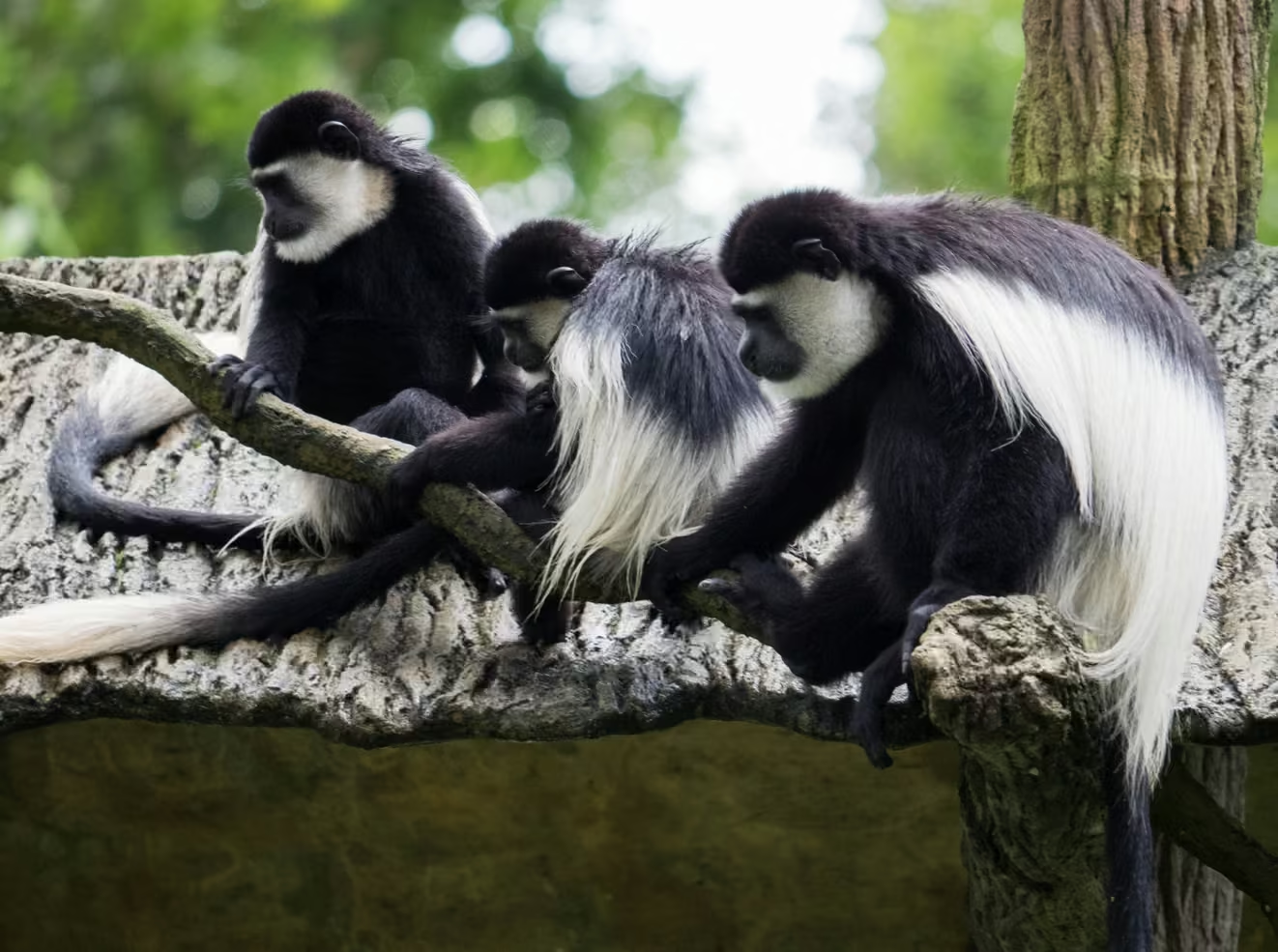
Wildlife encounters may include giraffes, buffaloes, zebras, warthogs, bushbucks, waterbucks, blue monkeys, black and white colobus monkeys and numerous bird species. Leopards are also present within the ecosystem, although sightings are uncommon.
For travelers seeking a quieter alternative to Tanzania’s busier safari destinations, Arusha National Park provides an intimate experience where beautiful landscapes, wildlife and outdoor adventure come together.
At Woodland Trek & Safaris, based in Arusha, Tanzania, we frequently recommend Arusha National Park to travelers looking for a convenient yet rewarding wildlife experience at the beginning or end of their Tanzania safari.
History of Arusha National Park
The landscape that forms modern Arusha National Park has long been shaped by volcanic activity, wildlife movement and human history associated with communities living around Mount Meru.
The park was officially established during the twentieth century, initially protecting the area surrounding Ngurdoto Crater. Over time, additional landscapes including the Momella Lakes and Mount Meru region were incorporated into the protected area, creating the diverse national park visitors explore today.
Mount Meru itself dominates both the physical landscape and the identity of the park. Rising to approximately 4,566 metres above sea level, Mount Meru is Tanzania’s second highest mountain after Mount Kilimanjaro and one of East Africa’s major volcanic mountains.
The mountain’s volcanic history has created fertile soils that support thick forests and diverse plant communities. These habitats provide shelter for primates, antelopes, buffaloes and a wide variety of birdlife.
Ngurdoto Crater represents another important geological feature within the park. Often surrounded by thick vegetation along its rim, the crater floor consists largely of grassland and marshy environments that can attract buffaloes and other wildlife.
Today, Arusha National Park plays an important role in Tanzania’s protected area network by conserving forests, wetlands, volcanic landscapes and wildlife habitats close to one of the country’s fastest growing tourism cities.
Its proximity to Arusha has also made the park one of the most important destinations for short Tanzania safaris and day trips from Arusha.
Geography Size and Ecology of Arusha National Park
Arusha National Park covers approximately 137 square kilometres, making it considerably smaller than many of Tanzania’s larger national parks.
Its relatively modest size should not be mistaken for limited diversity. The park contains several distinctive ecological zones that create one of the most varied landscapes in northern Tanzania.
Mount Meru
The most dominant geographical feature is Mount Meru, a massive volcanic mountain whose slopes rise dramatically above the surrounding plains.
The mountain creates different ecological zones according to altitude. Lower areas contain open woodland and grassland, while higher elevations support increasingly dense montane forests.
Mount Meru is also an important destination for mountain trekking. Climbers often spend several days ascending toward Socialist Peak, the mountain’s highest point.
The trek is famous for combining mountain scenery with wildlife encounters along the lower slopes.
Ngurdoto Crater
Another spectacular geographical feature is Ngurdoto Crater, a volcanic caldera surrounded by forested slopes.
The crater floor consists largely of grasslands, swamps and open spaces where wildlife can sometimes be observed from viewpoints along the rim.
Buffaloes are particularly associated with this area, while the surrounding forest provides habitat for monkeys, birds and smaller mammals.
Momella Lakes
The northeastern section of the park contains the beautiful Momella Lakes, a collection of shallow alkaline lakes formed within the wider volcanic landscape.
The mineral composition of the lakes creates varying colors, particularly when viewed under changing sunlight.
These wetlands attract numerous bird species, and flamingos may occasionally be seen depending on water conditions, food availability and seasonal movement.
Waterbirds, waders and other species make the Momella Lakes especially appealing to birdwatchers.
Forest Ecosystem
The forests of Arusha National Park are among its most important ecological environments.
Travelers may encounter black and white colobus monkeys, which are among the park’s most recognizable animals. Blue monkeys are also frequently observed within forested areas.
Other mammals found within the park include:
- African buffalo
- Masai giraffe
- Zebra
- Warthog
- Bushbuck
- Waterbuck
- Blue monkey
- Black and white colobus monkey
- Small antelope species
- Leopard, although sightings are rare
The absence of large concentrations of predators creates a noticeably different atmosphere from destinations such as Serengeti National Park.
Instead, Arusha National Park is especially celebrated for scenery, primates, giraffes, buffaloes, birdlife and outdoor safari activities.
Birdlife
Arusha National Park is an excellent destination for bird watching safaris in Tanzania, with hundreds of recorded bird species occurring across the forests, grasslands and wetlands.
Birdwatchers may search for:
- Flamingos around suitable lake environments
- African fish eagles
- Hornbills
- Turacos
- Waterbirds
- Raptors
- Forest birds
- Waders
- Migratory bird species during certain seasons
The combination of wetlands, forests and mountain environments makes the park particularly rewarding for photographers and specialist birding travelers.
Accessibility and How to Reach Arusha National Park
One of the strongest advantages of visiting Arusha National Park is its accessibility.
The park is located northeast of Arusha City, making it one of the easiest national parks to reach from Tanzania’s safari capital.
Depending on the starting point, road conditions and chosen entrance gate, the journey from central Arusha generally takes approximately 45 minutes to 1.5 hours.
This convenient location makes Arusha National Park ideal for travelers with limited time.
Visitors arriving through Kilimanjaro International Airport can also incorporate the park into the beginning or end of their Tanzania safari itinerary.
The park works particularly well for:
- Travelers spending an extra day in Arusha
- Visitors arriving before their main Tanzania safari
- Guests finishing a Kilimanjaro climb
- Travelers preparing for Mount Meru trekking
- Families looking for a relaxed safari experience
- Birdwatchers
- Photographers
- Visitors interested in walking safaris
- Travelers wanting a short safari before flying home
Most wildlife areas within the park are explored using 4×4 safari vehicles, although certain sections are also accessible through guided walking safaris and canoeing activities where permitted.
At Woodland Trek & Safaris, we arrange private transfers, professional safari guides, comfortable safari vehicles and customized Arusha National Park day trips directly from hotels, lodges or selected locations around Arusha.
Best Time to Visit Arusha National Park
Arusha National Park can be visited throughout the year, although each season creates a different safari atmosphere.
June to October
The period from June to October generally coincides with Tanzania’s long dry season and is considered an excellent time for wildlife viewing.
Vegetation may become less dense in some areas, making certain wildlife easier to observe.
Road conditions are generally favorable, temperatures are comfortable and clear mountain views may occur during good weather conditions.
This period is popular for:
- Game drives
- Walking safaris
- Wildlife photography
- Birdwatching
- Mount Meru trekking
November to December
The short rains normally begin during this period.
The landscape becomes increasingly green, creating beautiful conditions for photography.
Rain showers are often temporary rather than continuous throughout the entire day.
January to February
January and February can offer warm weather, greener landscapes and good visibility during certain periods.
These months can be particularly attractive for travelers combining Arusha National Park with other destinations across northern Tanzania.
March to May
This period usually receives the heaviest rainfall.
The park becomes exceptionally green and atmospheric, although some activities may occasionally be affected by heavy rain or muddy conditions.
Birdwatching can be rewarding, while the forests appear especially lush.
For travelers primarily interested in wildlife and comfortable driving conditions, June through October is generally an excellent period.
For photographers who appreciate green landscapes, dramatic skies and fewer visitors, parts of the rainy season can provide a completely different experience.
Common Activities in Arusha National Park
Arusha National Park offers far more than traditional wildlife viewing from a safari vehicle.
Its diverse terrain allows visitors to combine several experiences within a single destination.
Game Drives
A game drive in Arusha National Park allows visitors to explore forest roads, open grasslands, crater viewpoints and the Momella Lakes region.
During a typical drive, guests may encounter giraffes walking across open landscapes, buffaloes grazing near wetlands, zebras, warthogs and monkeys moving through the forest canopy.
Because the park is relatively compact, travelers can experience dramatically different environments within a single day.
Walking Safaris
Arusha National Park is one of the popular destinations for guided walking safaris in northern Tanzania.
Walking through the wilderness offers a completely different perspective from observing wildlife inside a vehicle.
Accompanied by an authorized guide or ranger, visitors can explore selected areas while learning about animal tracks, plants, ecosystems and smaller details of the natural environment.
A walking safari can provide opportunities to observe giraffes, buffaloes, warthogs, birds and other wildlife from a respectful distance.
Canoeing on Momella Lakes
One of the most distinctive experiences available in the park is canoeing on the Momella Lakes, depending on current park regulations and operating conditions.
The activity provides a peaceful way to experience the surrounding landscape from the water.
Visitors may observe waterbirds and wildlife along the shores while enjoying views of the surrounding mountains.
Mount Meru Trekking
Adventure travelers can also use Arusha National Park as the starting point for climbing Mount Meru.
The trek usually requires several days and passes through wildlife areas, montane forests, higher altitude landscapes and volcanic terrain before reaching the summit region.
Mount Meru is often considered excellent preparation for climbers planning to attempt Mount Kilimanjaro.
The route is also rewarding as an independent mountain adventure.
Bird Watching
With its combination of forest, mountain and wetland ecosystems, the park offers outstanding opportunities for bird watching tours near Arusha.
Specialist birding safaris can focus on forest species, waterbirds and birds associated with the highland environment.
Wildlife Photography
The changing landscapes provide excellent opportunities for photography.
Popular subjects include:
- Giraffes against Mount Meru
- Colobus monkeys in the forest
- Buffaloes around crater and wetland environments
- Momella Lakes
- Flamingos and waterbirds
- Mountain landscapes
- Sunrise and morning light
- Forest scenery
- Volcanic formations
For travelers searching for a highly photographic day safari from Arusha, the park offers exceptional variety without requiring long driving distances.
Accommodation Options Near Arusha National Park
There are numerous accommodation choices around Arusha National Park, Mount Meru, Usa River and the greater Arusha region.
The most suitable option will depend on your budget, preferred comfort level and overall safari itinerary.
Luxury Lodges
Luxury safari lodges and boutique properties around the Arusha area offer peaceful gardens, spacious rooms, swimming pools, fine dining and beautiful views of Mount Meru or Mount Kilimanjaro during favorable weather conditions.
These accommodations are ideal for honeymooners, luxury travelers and guests looking for relaxation before or after a Tanzania safari.
Midrange Safari Lodges
Midrange accommodation is widely available around Arusha, Usa River and areas near Arusha National Park.
These lodges generally provide comfortable rooms, restaurants, gardens and convenient access to safari routes.
They are popular among couples, families and small private groups.
Budget Accommodation
Budget hotels, guesthouses and camps can also be found throughout the Arusha region.
These options are especially useful for travelers preparing for longer safaris, Mount Meru climbs or Kilimanjaro expeditions.
Staying in Arusha City
Because the park is located relatively close to Arusha, travelers can also stay directly within the city and visit the park as a day trip.
This can be particularly convenient for guests arriving in Tanzania shortly before beginning a longer safari toward Tarangire National Park, Lake Manyara National Park, Ngorongoro Conservation Area and Serengeti National Park.
When planning your safari with Woodland Trek & Safaris, accommodation can be selected according to your preferred travel style, ranging from comfortable budget properties to exclusive luxury safari lodges.
Why Visit Arusha National Park
Arusha National Park offers a combination that is difficult to find elsewhere in northern Tanzania.
Within one relatively compact protected area, travelers can experience wildlife, mountain scenery, volcanic landscapes, forests, lakes, walking safaris, canoeing and birdwatching.
The park is particularly recommended for travelers who want:
- A convenient Arusha safari day trip
- Wildlife viewing close to Arusha City
- Guided walking safari experiences
- Mount Meru trekking
- Beautiful landscapes and photography
- Bird watching
- A quieter national park experience
- An introduction to Tanzania before visiting larger safari destinations
- A relaxed final safari before departure
It also combines beautifully with longer Northern Tanzania safari itineraries, allowing travelers to begin their journey among the forests beneath Mount Meru before continuing toward Tarangire, Ngorongoro and the endless plains of Serengeti National Park.
Plan Your Arusha National Park Safari With Woodland Trek & Safaris
Some journeys begin with a long road into the wilderness. Others begin almost at the doorstep of Arusha.
Arusha National Park offers an unforgettable introduction to Tanzania, where giraffes wander beneath volcanic mountains, colobus monkeys leap through ancient forests and tranquil lakes reflect the changing colors of the African sky.
Whether you are looking for a private Arusha National Park day safari, guided walking safari, birdwatching tour, canoeing experience, Mount Meru trekking adventure or customized Tanzania safari itinerary, Woodland Trek & Safaris can design an experience around your interests, schedule and preferred travel style.
Based in Arusha, Tanzania, our team understands the landscapes, wildlife areas and safari routes of northern Tanzania. We create carefully planned journeys that connect travelers with the country through meaningful wildlife encounters, professional guiding and authentic African experiences.
Explore Arusha National Park with Woodland Trek & Safaris and let your Tanzania journey begin beneath the magnificent shadow of Mount Meru.
Practical Info
How to Book Your Safari
Preparing for a Safari
Preparing for Mountain Climbing
Visa in Tanzania
Conservation In Tanzania
Weather In Tanzania
Read Reviews

Follow us
- Woodland Trek Safaris Ltd
- @woodlandtrek_safari
- +255 682 956 506
- +255 769 950 057
- info@woodlandtrekandsafaris.com
- sales@woodlandtrekandsafaris.com
- Arusha, Tanzania
We Accept