
Lake Manyara National Park

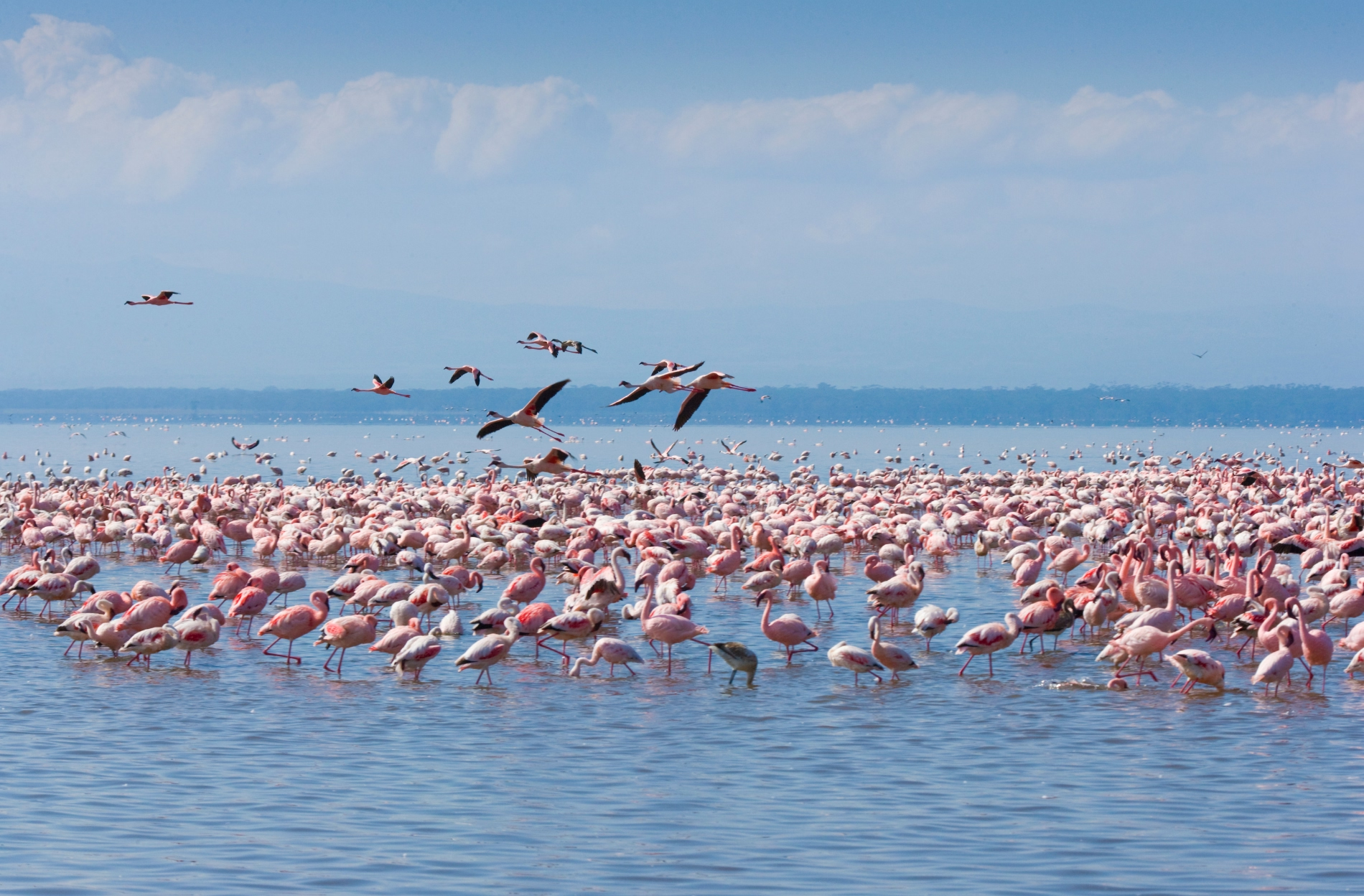
Lake Manyara National Park
Nestled beneath the dramatic cliffs of the Great Rift Valley escarpment, Lake Manyara National Park is one of northern Tanzania’s most scenic and ecologically diverse safari destinations. Although smaller than famous parks such as Serengeti and Tarangire, Lake Manyara offers an impressive concentration of landscapes, wildlife and birdlife within a remarkably compact area.
The park stretches between the Rift Valley wall and the shallow alkaline waters of Lake Manyara, creating a beautiful natural corridor of groundwater forest, acacia woodland, open grassland, wetlands and lakeshore habitats. This diversity makes the park especially rewarding for travelers who want to experience several different ecosystems during a single safari day.
Lake Manyara National Park is particularly famous for its tree climbing lions, large troops of baboons, elephants, giraffes, buffaloes, zebras, hippos and spectacular birdlife. Depending on seasonal water conditions, flamingos and other waterbirds can gather around the lake, transforming the shoreline into one of the most photogenic landscapes on Tanzania’s Northern Safari Circuit.
For travelers planning a Tanzania safari in 2026, Lake Manyara is an excellent destination to combine with Tarangire National Park, Ngorongoro Conservation Area and Serengeti National Park. Its convenient location also makes it suitable for short safari itineraries and day trips from Arusha.
At Woodland Trek & Safaris, located in Arusha, Tanzania, we design personalized Lake Manyara safaris, Northern Tanzania wildlife tours, family safaris, honeymoon safaris, photographic safaris and customized Tanzania safari packages that allow travelers to experience the park at a comfortable and rewarding pace.
History of Lake Manyara National Park
The landscapes surrounding Lake Manyara have supported wildlife and human communities for generations.
The wider area has long been associated with pastoral communities and farming settlements living around the fertile valleys and highlands of northern Tanzania.
As wildlife conservation became increasingly important during the twentieth century, the extraordinary ecological diversity of the Lake Manyara region attracted greater protection.
The area was first established as a protected reserve before later becoming Lake Manyara National Park in 1960.
The park was created primarily to conserve the important habitats surrounding the lake, including groundwater forests, wetlands, woodland and wildlife corridors connecting the Rift Valley ecosystem with surrounding landscapes.
Over time, Lake Manyara became internationally known through wildlife documentaries and safari literature, particularly because of reports of lions resting in trees.
Today, Lake Manyara National Park remains an important part of northern Tanzania’s protected area network.
Its location between Tarangire and Ngorongoro makes it both ecologically significant and strategically important for tourism.
The park also plays a role in protecting important bird habitats and seasonal wildlife movement routes across the greater Manyara ecosystem.
Geography Size and Ecology of Lake Manyara National Park
Lake Manyara National Park covers approximately 330 square kilometres, although the exact amount of land and water visible within the park changes considerably according to rainfall and lake levels.
A large proportion of the protected area can be occupied by Lake Manyara itself during periods of higher water levels.
The park lies along the base of the Great Rift Valley escarpment, one of East Africa’s most impressive geological features.
This dramatic wall rises sharply above the western side of the park, creating a spectacular backdrop for wildlife viewing.
Despite its relatively small size, Lake Manyara contains an extraordinary variety of habitats.
Lake Manyara
The shallow alkaline lake is the defining geographical feature of the national park.
Its size changes significantly between wet and dry periods depending on rainfall, evaporation and water flowing from surrounding rivers and underground springs.
Lake Manyara provides important feeding grounds for waterbirds and supports a complex wetland ecosystem.
Depending on water levels and food availability, visitors may see flamingos and other aquatic birds gathering along parts of the shoreline.
The lake is also surrounded by open areas where zebras, wildebeest, buffaloes and other grazing animals may be observed.
Groundwater Forest
One of the most beautiful environments in Lake Manyara National Park is its lush groundwater forest.
This forest receives moisture from underground springs originating from the Rift Valley highlands.
Large trees, thick vegetation and abundant water create a completely different atmosphere from the dry savannah landscapes associated with many other northern Tanzania parks.
The groundwater forest supports wildlife such as:
- Blue monkeys
- Vervet monkeys
- Baboons
- Bushbucks
- Elephants
- Numerous forest bird species
Driving through this dense green environment provides visitors with an impressive introduction to the park.
Acacia Woodland
Beyond the forest, the landscape gradually opens into acacia woodland.
This habitat supports many of Lake Manyara’s larger animals.
Visitors may encounter giraffes browsing on acacia trees, elephants feeding between woodland areas and lions resting in shaded environments.
The woodland also provides excellent habitat for leopards, although sightings are uncommon and depend heavily on luck.
Grasslands and Floodplains
Open grasslands and seasonal floodplains occupy sections of the park close to the lake.
These areas provide grazing for herbivores including:
- Zebras
- Wildebeest
- Buffaloes
- Warthogs
- Impala
- Waterbuck
During wetter periods, sections of the floodplain can become inundated, changing wildlife distribution and creating excellent habitats for waterbirds.
Hot Springs
The southern region of Lake Manyara contains geothermal features, including hot springs commonly associated with the Great Rift Valley’s volcanic geology.
These springs provide travelers with another indication of the powerful geological forces that shaped this part of Tanzania.
The surrounding landscapes can be particularly beautiful, combining wetlands, mountains and distant lake views.
Wildlife of Lake Manyara National Park
Lake Manyara may be relatively compact, but it supports a surprisingly varied collection of wildlife.
The park is particularly well known for elephants, baboons, giraffes and buffaloes.
Common animals include:
- African elephants
- African buffaloes
- Giraffes
- Zebras
- Wildebeest
- Warthogs
- Hippos
- Impala
- Waterbuck
- Bushbuck
- Blue monkeys
- Vervet monkeys
- Olive baboons
- Lions
- Leopards
- Spotted hyenas
Wildlife numbers and locations change according to rainfall, vegetation and seasonal water availability.
Tree Climbing Lions
One of Lake Manyara National Park’s most famous attractions is its association with tree climbing lions.
Lions in this region have long been observed resting on the branches of acacia and other trees.
The exact reasons for this behavior are not fully understood and may relate to avoiding insects, escaping heat, gaining a better viewpoint or simply learned behavior among certain prides.
Tree climbing lion sightings should never be guaranteed because the animals move naturally across the ecosystem.
However, encountering a lion stretched along a tree branch remains one of the most memorable wildlife experiences possible within the park.
Baboons and Primates
Lake Manyara is famous for its large troops of olive baboons.
Groups can sometimes contain dozens of individuals moving together through forests, roadsides and open areas.
Watching their social behavior can be fascinating as adults groom one another, juveniles play and dominant animals maintain complex relationships within the troop.
Blue monkeys and vervet monkeys are also commonly observed in forested environments.
Birdlife in Lake Manyara National Park
Lake Manyara is considered one of northern Tanzania’s excellent destinations for bird watching safaris.
The park’s forests, wetlands, lake environment and grasslands support hundreds of bird species.
Birdwatchers may encounter:
- Flamingos
- Pelicans
- Cormorants
- Storks
- Herons
- Egrets
- Kingfishers
- Hornbills
- Eagles
- Vultures
- Weaver birds
- Bee eaters
- Waterfowl
- Migratory birds during certain seasons
The number and distribution of flamingos can change considerably depending on lake conditions.
Travelers specifically interested in flamingos should therefore understand that large concentrations cannot be guaranteed at all times.
For general birdwatching, however, Lake Manyara remains rewarding throughout much of the year.
Accessibility and How to Reach Lake Manyara National Park
Lake Manyara National Park is one of the most accessible safari destinations on Tanzania’s Northern Circuit.
The park is located approximately 120 kilometres from Arusha, with road journeys commonly taking around two to three hours, depending on traffic, road conditions and the exact starting point.
Most travelers reach the park by private 4×4 safari vehicle.
The journey from Arusha travels west through beautiful countryside and local communities before approaching the Great Rift Valley.
Lake Manyara is especially convenient because of its proximity to other major destinations.
Travelers can easily combine it with:
- Tarangire National Park
- Ngorongoro Conservation Area
- Serengeti National Park
- Lake Eyasi
- Karatu
A typical Northern Tanzania safari might begin in Arusha, continue toward Tarangire or Lake Manyara, then travel through Karatu and Ngorongoro before entering Serengeti National Park.
This routing makes Lake Manyara an excellent first or second stop on a longer safari.
At Woodland Trek & Safaris, we arrange comfortable private transfers, professional driver guides, safari vehicles, park logistics and customized itineraries from Arusha to Lake Manyara and throughout northern Tanzania.
Best Time to Visit Lake Manyara National Park
Lake Manyara National Park can be visited throughout the year.
The best period depends on whether you are primarily interested in wildlife viewing, birdwatching, photography or greener landscapes.
June to October
The long dry season from approximately June through October is one of the most popular times for wildlife viewing.
Vegetation becomes less dense in certain areas and animals may concentrate around reliable water sources.
Road conditions are generally favorable, and sunny weather is common.
This period is particularly suitable for:
- Game drives
- Wildlife photography
- Family safaris
- Combination Northern Circuit safaris
- First time safari travelers
November and December
The short rains often begin during these months.
The park gradually becomes greener and more colorful.
Wildlife remains present, while bird activity can increase as seasonal conditions change.
Rain showers are often intermittent, leaving plenty of opportunities for safari activities.
January and February
January and February can offer warm weather, attractive green landscapes and rewarding wildlife viewing.
These months are useful for travelers combining Lake Manyara with the wider Northern Circuit.
Birdwatching can also be excellent.
March to May
This period generally corresponds with the main rainy season.
Lake levels and wetlands may expand, vegetation becomes lush and the park takes on a beautiful tropical appearance.
Birdlife can be particularly rewarding during this period.
However, heavy rain can occasionally make some roads muddy and affect accessibility to certain areas.
For travelers seeking classic wildlife viewing conditions, June through October is commonly recommended.
For birdwatchers, photographers and visitors who enjoy greener landscapes, the wetter months can provide an equally rewarding experience.
Common Activities in Lake Manyara National Park
Lake Manyara offers much more than a simple drive through the park.
Its scenery and ecological diversity allow visitors to enjoy several different activities depending on current regulations and availability.
Game Drives
Game drives are the primary activity in Lake Manyara National Park.
Visitors travel through forests, woodland, floodplains and lakeshore environments while searching for wildlife.
A typical game drive may include encounters with:
- Elephants
- Buffaloes
- Giraffes
- Zebras
- Baboons
- Hippos
- Lions
- Antelope species
- Numerous birds
Because ecosystems change quickly within a relatively small area, game drives can feel surprisingly varied.
Morning game drives are especially enjoyable because wildlife is often active and temperatures are cooler.
Bird Watching
Lake Manyara is an excellent destination for travelers interested in Tanzania birding safaris.
Professional guides can help identify waterbirds, forest species, raptors and seasonal migrants.
Visitors with specialist birding interests may dedicate extra time to the lake, groundwater forest and wetland environments.
Wildlife Photography
The park provides impressive photography opportunities.
Popular subjects include:
- Elephants in groundwater forest
- Giraffes beneath the Rift Valley cliffs
- Baboons and monkeys
- Hippos
- Flamingos and waterbirds
- Lions when encountered
- Lake landscapes
- Rift Valley escarpment scenery
- Sunrise and afternoon light
- Acacia woodland
Private safari vehicles are particularly useful for photographers who want flexibility at wildlife sightings.
Treetop Walkway Experience
Lake Manyara is associated with canopy style walkway experiences in the surrounding area, allowing travelers to view parts of the forest environment from above.
Such activities should be arranged according to current operating conditions and availability.
They can provide an enjoyable addition to a traditional wildlife safari.
Cultural Experiences
The communities around Lake Manyara and nearby Mto wa Mbu provide excellent opportunities for cultural tourism.
Visitors may explore local farms, markets, village environments and traditional food experiences.
Depending on the itinerary, cultural activities may include:
- Local village walks
- Traditional meals
- Banana plantation visits
- Local art and handicraft experiences
- Community based tourism activities
- Market visits
These experiences allow travelers to understand more about everyday life in northern Tanzania beyond national park boundaries.
Cycling Experiences
Cycling tours can also be arranged in selected areas outside the national park.
These excursions may pass through farms, villages and rural landscapes near the Rift Valley.
Cycling provides a slower and more personal way to experience the surrounding community environment.
Canoeing Experiences
Canoeing may be available in designated areas depending on water levels, regulations and operating conditions.
When available, it can provide a unique perspective of the lake ecosystem and surrounding landscapes.
Because seasonal conditions change, availability should always be confirmed during trip planning.
Accommodation Options Around Lake Manyara National Park
Lake Manyara and the surrounding areas offer accommodation for a wide range of budgets and travel styles.
Travelers may stay inside the broader park region, around Mto wa Mbu, along the Rift Valley escarpment or near Karatu.
Luxury Safari Lodges
Luxury lodges around Lake Manyara provide some of the most spectacular views in northern Tanzania.
Properties positioned along the escarpment can overlook the lake, Rift Valley floor and surrounding landscapes.
Luxury facilities may include:
- Spacious suites
- Private verandas
- Swimming pools
- Fine dining
- Spa facilities
- Sundowner locations
- Personalized service
- Private safari arrangements
These properties are particularly suitable for honeymoon safaris, luxury Tanzania holidays and special occasion travel.
Tented Safari Camps
Tented camps provide a more intimate connection to the natural surroundings.
Guests may stay in spacious canvas rooms equipped with comfortable beds, private bathrooms and safari style furnishings.
These properties offer a traditional African safari atmosphere while maintaining modern comfort.
Midrange Lodges
Midrange lodges are widely available near Lake Manyara, Mto wa Mbu and Karatu.
They generally provide:
- Comfortable en suite rooms
- Restaurants
- Gardens
- Lounge areas
- Swimming pools at selected properties
- Convenient safari access
These lodges are popular with couples, families and private groups seeking a good balance of comfort and value.
Budget Accommodation
Budget guesthouses, camps and smaller lodges are available in surrounding towns.
They can be suitable for travelers who prefer to spend more of their safari budget on activities and park experiences.
Staying in Karatu
Karatu is a popular overnight base for travelers visiting both Lake Manyara and Ngorongoro.
The town and surrounding highlands contain numerous lodges ranging from modest properties to luxurious retreats.
Staying in Karatu makes it easy to continue toward Ngorongoro the following morning.
At Woodland Trek & Safaris, we select accommodation according to your preferred comfort level, location, budget and overall safari itinerary.
How Many Days Should You Spend in Lake Manyara National Park
Lake Manyara National Park can comfortably be explored in a single day, making it an excellent addition to shorter Tanzania safari itineraries.
Suggested durations include:
- Half day for travelers passing through the area
- 1 full day for a complete wildlife experience
- 1 night for travelers combining wildlife and cultural activities
- 2 nights for a more relaxed stay including nearby village, cycling or community experiences
For most first time visitors, one full safari day provides a rewarding introduction to the park.
Travelers interested in birdwatching, photography and nearby cultural activities may benefit from spending additional time in the area.
Why Visit Lake Manyara National Park
Lake Manyara National Park offers a different safari experience from the vast plains of Serengeti or the baobab landscapes of Tarangire.
Its beauty comes from diversity.
Within a relatively compact park, travelers can experience forest, lake, floodplain, woodland and Rift Valley landscapes.
Reasons to visit Lake Manyara include:
- Tree climbing lions
- Large elephant populations
- Excellent primate viewing
- Beautiful groundwater forest
- Lake and wetland scenery
- Rich birdlife
- Flamingo viewing opportunities
- Hippos
- Great Rift Valley landscapes
- Convenient access from Arusha
- Easy combination with Ngorongoro and Serengeti
- Cultural experiences around Mto wa Mbu
- Excellent photography opportunities
Lake Manyara is particularly suitable for travelers who appreciate scenery and ecological diversity alongside traditional wildlife viewing.
Combining Lake Manyara With Other Tanzania Safari Destinations
Lake Manyara fits naturally into almost any Northern Tanzania safari itinerary.
A classic route may include:
- Arusha
- Tarangire National Park
- Lake Manyara National Park
- Ngorongoro Conservation Area
- Serengeti National Park
Travelers may also continue toward Mount Kilimanjaro or fly to Zanzibar after completing their safari.
A combination of Lake Manyara, Ngorongoro and Serengeti allows visitors to experience three completely different environments within one journey.
Lake Manyara provides forests and wetlands.
Ngorongoro offers dramatic volcanic landscapes and concentrated wildlife.
Serengeti reveals immense plains and the extraordinary rhythm of the Great Wildebeest Migration.
Together, these destinations create one of Africa’s most rewarding safari circuits.
Plan Your Lake Manyara Safari With Woodland Trek & Safaris
There are moments on safari when the landscape becomes as unforgettable as the wildlife itself.
At Lake Manyara National Park, elephants emerge silently from dense forest, giraffes move beneath the towering walls of the Great Rift Valley, baboons gather along woodland tracks and countless birds bring movement and color to the edges of the lake.
It is a destination where northern Tanzania changes character within every few kilometres.
At Woodland Trek & Safaris, located in Arusha, Tanzania, we create carefully planned Lake Manyara safari packages, private Tanzania wildlife tours, luxury Northern Circuit safaris, family safari holidays, honeymoon safaris, photographic tours and customized African adventures.
Whether you want to experience Lake Manyara during a day safari from Arusha, combine it with Tarangire and Ngorongoro, or include it within a longer journey toward Serengeti National Park, our team can design an itinerary based on your time, interests, budget and preferred level of comfort.
Discover forests alive with primates, follow elephant trails beneath the Rift Valley escarpment and experience one of northern Tanzania’s most beautifully diverse safari destinations.
Explore Lake Manyara National Park with Woodland Trek & Safaris and let the changing landscapes of Tanzania become part of your African journey.
Practical Info
How to Book Your Safari
Preparing for a Safari
Preparing for Mountain Climbing
Visa in Tanzania
Conservation In Tanzania
Weather In Tanzania
Read Reviews

Follow us
- Woodland Trek Safaris Ltd
- @woodlandtrek_safari
- +255 682 956 506
- +255 769 950 057
- info@woodlandtrekandsafaris.com
- sales@woodlandtrekandsafaris.com
- Arusha, Tanzania
We Accept