Ngorongoro Conservation Area

Ngorongoro Conservation Area
Few places in Africa combine wildlife, dramatic landscapes, human history and living culture as beautifully as the Ngorongoro Conservation Area in northern Tanzania. Located along the country’s famous Northern Safari Circuit, this extraordinary protected landscape is best known for the magnificent Ngorongoro Crater, one of the largest intact volcanic calderas in the world and one of Tanzania’s most rewarding wildlife viewing destinations.
Covering approximately 8,292 square kilometres, the Ngorongoro Conservation Area stretches across volcanic highlands, open grasslands, forests, crater landscapes, archaeological sites and pastoral areas. Unlike a conventional national park, the conservation area was established as a multiple land use landscape where wildlife conservation, tourism and traditional pastoral communities coexist within the same protected region.
For travelers planning a Tanzania safari in 2026, Ngorongoro is one of the most important destinations to include. It combines remarkably high wildlife concentrations with spectacular scenery and easy connections to Serengeti National Park, Lake Manyara National Park and Tarangire National Park.
The centerpiece of the area is the Ngorongoro Crater, an enormous volcanic caldera whose floor supports lions, elephants, buffaloes, zebras, wildebeest, hippos, hyenas, gazelles and the endangered black rhinoceros. Because so much wildlife occurs within a relatively compact area, the crater is one of the best places in northern Tanzania for travelers hoping to see several iconic African animals within a single safari day.
Beyond the crater, the wider conservation area contains highland forests, volcanic mountains, the famous Olduvai Gorge, shifting sands, Maasai pastoral landscapes and broad plains that form part of the greater Serengeti ecosystem.
At Woodland Trek & Safaris, located in Arusha, Tanzania, we design personalized Ngorongoro Crater safaris, Northern Tanzania safari packages, private wildlife tours, honeymoon safaris, family safaris and luxury African safari itineraries that connect Ngorongoro with the finest destinations across Tanzania.
History of Ngorongoro Conservation Area
The human history of Ngorongoro stretches back millions of years.
The wider region contains some of the most important archaeological and paleoanthropological sites in Africa, particularly around Olduvai Gorge, where discoveries have contributed significantly to the scientific understanding of early human evolution.
Long before modern conservation boundaries were established, pastoral communities inhabited and moved through the Ngorongoro highlands and surrounding plains.
The Maasai became particularly associated with the region, grazing cattle across parts of the highlands and plains while living alongside wildlife.
During the twentieth century, the area became increasingly important for wildlife protection.
Initially, Ngorongoro formed part of the larger Serengeti protected landscape. However, different conservation and land use priorities eventually led to the creation of a separate conservation area.
The Ngorongoro Conservation Area was officially established in 1959.
Its management philosophy differed from that of traditional national parks because the landscape was designed to accommodate wildlife conservation alongside human habitation and pastoralism.
Over subsequent decades, Ngorongoro gained global recognition for its exceptional combination of biodiversity, geological importance, cultural heritage and archaeological value.
Today, it remains one of Tanzania’s most famous tourism destinations and an essential stop on almost every classic Northern Tanzania safari itinerary.
Geography Size and Ecology of Ngorongoro Conservation Area
The Ngorongoro Conservation Area covers approximately 8,292 square kilometres of northern Tanzania.
Its geography is extraordinarily varied.
The region includes volcanic craters, high altitude forests, grasslands, valleys, archaeological sites and plains that connect ecologically with the Serengeti.
The landscape was shaped by millions of years of volcanic activity associated with the Great Rift Valley.
Several extinct and dormant volcanic formations remain visible across the highlands.
The most famous of these is Ngorongoro Crater.
Ngorongoro Crater
The Ngorongoro Crater is the defining feature of the conservation area.
It was created after a massive volcano collapsed inward millions of years ago, forming an enormous caldera.
The crater floor covers roughly 260 square kilometres, while its walls rise several hundred metres above the interior plains.
The crater rim reaches elevations of more than 2,000 metres above sea level, creating a cooler highland climate compared with the warmer plains below.
Inside the crater, different habitats occur within a surprisingly compact area.
These include:
- Open grasslands
- Acacia woodland
- Freshwater springs
- Seasonal wetlands
- Lerai Forest
- Lake Magadi
- Hippo pools
This ecological diversity supports an extraordinary concentration of wildlife.
The crater’s steep walls influence animal movement, although many species can move in and out of the caldera naturally.
Ngorongoro Highlands
The highlands surrounding the crater are dramatically different from the dry plains below.
Cooler temperatures, higher rainfall and fertile volcanic soils support dense forests, grasslands and farming areas.
The highlands also contain several volcanic features, including craters and mountains.
These landscapes provide important habitats for elephants, buffaloes, leopards, birds and smaller mammals.
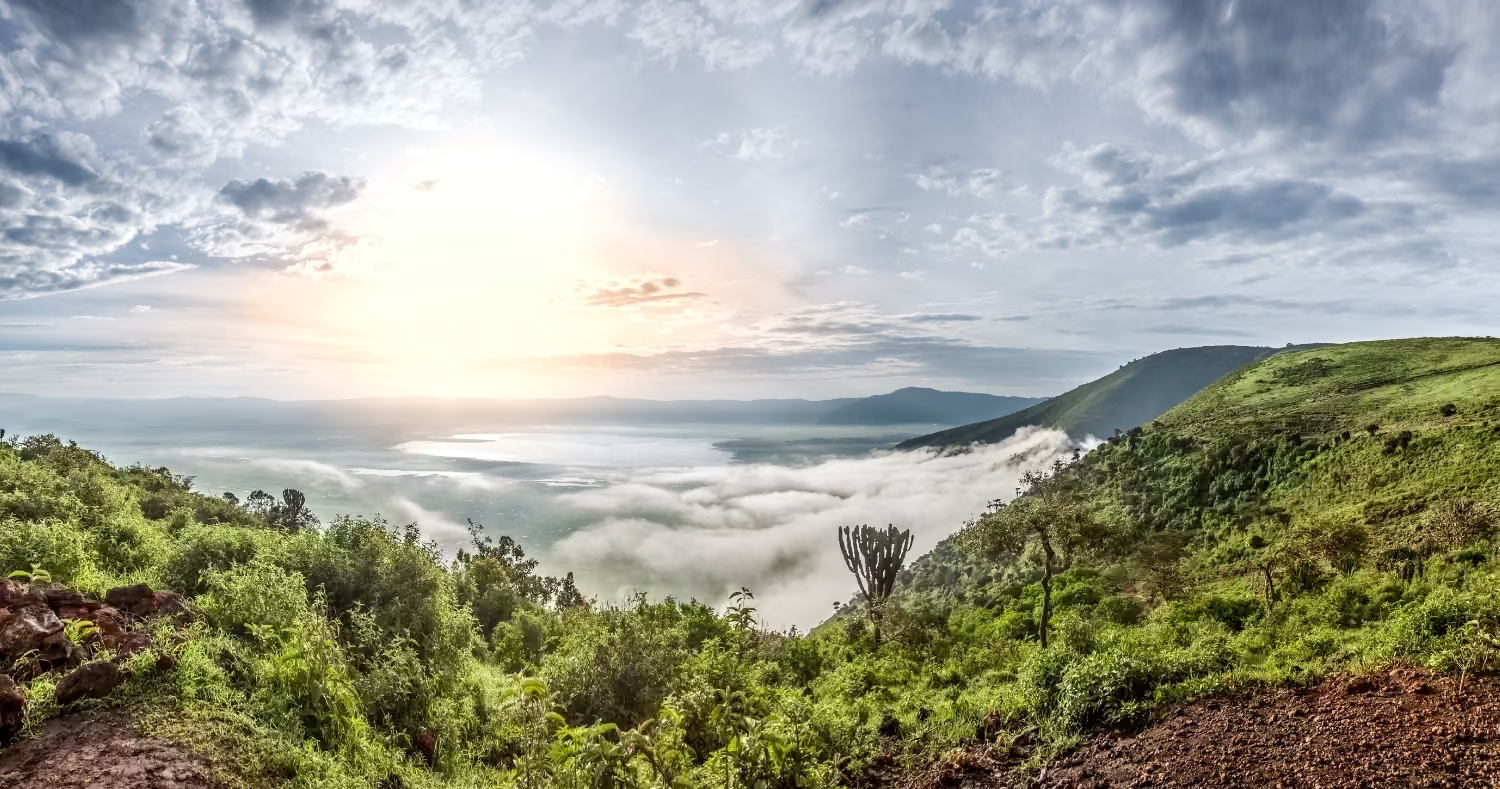
Mist frequently settles over the crater rim during mornings and evenings, creating some of the most atmospheric scenery in northern Tanzania.
Lake Magadi
Lake Magadi lies on the floor of Ngorongoro Crater.
This shallow alkaline lake forms an important part of the crater ecosystem.
During suitable environmental conditions, flamingos and other waterbirds may gather around the lake.
The surrounding grasslands frequently attract wildebeest, zebras and gazelles, while predators patrol nearby areas searching for prey.
Lerai Forest
The Lerai Forest is an important woodland environment on the crater floor.
The forest contains distinctive fever trees and provides shade, shelter and feeding opportunities for several species.
Elephants are frequently associated with this area, particularly mature bulls.
Other animals may include bushbucks, monkeys and various bird species.
Wildlife of Ngorongoro Conservation Area
Ngorongoro is famous for its exceptional wildlife density.
The crater floor supports a largely resident population of many species, providing relatively consistent game viewing throughout the year.
Common wildlife includes:
- African lions
- African elephants
- Black rhinoceros
- African buffaloes
- Wildebeest
- Zebras
- Thomson’s gazelles
- Grant’s gazelles
- Spotted hyenas
- Warthogs
- Hippos
- Jackals
- Elands
- Hartebeest
The crater is particularly important for travelers hoping to see the black rhinoceros, although sightings can never be guaranteed.
The open crater floor provides good visibility, making animals easier to locate than in heavily forested environments.
Lions and Predators
Ngorongoro Crater is especially famous for its lions.
Several prides inhabit the crater, where abundant grazing animals provide a reliable prey base.
Visitors may see lions resting on open grasslands, interacting around kills or moving between territories.
Spotted hyenas are also extremely common and play an important ecological role as both hunters and scavengers.
Jackals and other smaller carnivores can also be observed.
Cheetahs are occasionally seen in suitable open areas, while leopards are more commonly associated with forested habitats around the wider conservation area.
Black Rhinoceros
The endangered black rhinoceros is one of Ngorongoro’s most celebrated animals.
The crater and surrounding conservation landscapes remain important areas for rhino protection.
Sightings often occur from a distance because these animals may remain in quieter areas of the crater floor.
For many visitors, seeing a black rhino in the wild becomes one of the highlights of a Tanzania safari.
Birdlife of Ngorongoro Conservation Area
The diversity of habitats across Ngorongoro supports hundreds of bird species.
Birdwatchers may encounter:
- Flamingos
- Crowned cranes
- Ostriches
- Secretary birds
- Eagles
- Vultures
- Bustards
- Storks
- Herons
- Ducks
- Raptors
- Highland forest birds
The crater floor is particularly rewarding for open grassland and wetland species, while the forested highlands support a completely different bird community.
For travelers interested in bird watching safaris in Tanzania, Ngorongoro combines extremely well with Lake Manyara, Tarangire and Serengeti.
Olduvai Gorge and Human History
One of the most important attractions beyond the crater is Olduvai Gorge, located within the greater Ngorongoro landscape.
The gorge is internationally recognized for archaeological discoveries connected with early human development.
Excavations in the region uncovered fossils, ancient tools and evidence that have helped researchers understand how early humans lived and evolved.
For travelers, a visit to Olduvai provides a fascinating contrast to traditional wildlife viewing.
Instead of focusing only on animals and scenery, visitors can explore the extraordinary depth of human history preserved within northern Tanzania.
The area is especially suitable for travelers interested in:
- Archaeology
- Anthropology
- Human evolution
- East African history
- Educational safari experiences
Maasai Culture and Traditional Life
The Ngorongoro Conservation Area is also distinguished by the presence of Maasai communities.
For generations, Maasai pastoralists have used parts of the wider landscape for livestock grazing and settlement.
Their presence makes Ngorongoro fundamentally different from many national parks where permanent human habitation is restricted.
Visitors may encounter Maasai herders moving livestock across highland landscapes or settlements located in designated community areas.
Cultural visits may be included within some safari itineraries.
Responsible cultural tourism should respect local communities, traditions and privacy.
At Woodland Trek & Safaris, cultural experiences can be incorporated thoughtfully into a broader Ngorongoro safari for travelers interested in learning more about Tanzania beyond wildlife viewing.
Accessibility and How to Reach Ngorongoro Conservation Area
Ngorongoro Conservation Area is conveniently located along Tanzania’s Northern Safari Circuit.
Most safaris begin from Arusha, the principal gateway for northern Tanzania wildlife adventures.
The drive from Arusha to the Ngorongoro region generally takes approximately three to four hours, depending on traffic, weather conditions, stops and the exact accommodation location.
The road commonly passes through areas including:
- Mto wa Mbu
- Lake Manyara region
- Karatu
- The Rift Valley landscapes
Karatu is one of the most common overnight bases before entering Ngorongoro.
From the highlands, safari vehicles travel toward the crater rim before descending into the crater using designated access roads.
Because the crater floor is explored using 4×4 safari vehicles, visitors can experience different wildlife habitats during a morning or full day excursion.
Ngorongoro also acts as an important geographical link between the eastern Northern Circuit and Serengeti National Park.
Travelers proceeding toward Serengeti commonly cross parts of the conservation area before descending toward the open plains.
At Woodland Trek & Safaris, we arrange private safari vehicles, professional driver guides, transfers, accommodation and complete safari logistics from Arusha to Ngorongoro and onward to Serengeti.
Best Time to Visit Ngorongoro Conservation Area
Ngorongoro is an excellent year round safari destination.
Because much of the crater wildlife is resident, visitors can enjoy rewarding game viewing during every season.
The experience changes according to rainfall, vegetation, temperature and visitor numbers.
June to October
The period from June through October generally coincides with Tanzania’s long dry season.
This is one of the most popular times for Ngorongoro safaris.
Vegetation on the crater floor may become shorter, making some wildlife easier to see.
Weather conditions are generally dry, although mornings along the highland rim can be cold.
This period is suitable for:
- Wildlife viewing
- Photography
- Family safaris
- Honeymoon safaris
- Combined Serengeti and Ngorongoro tours
November and December
Short rains generally begin during this period.
The landscape becomes greener, while wildlife viewing remains strong.
Rain showers are often temporary, and the changing skies can create beautiful photographic conditions.
January and February
January and February are excellent months for combining Ngorongoro with the southern Serengeti and Ndutu region.
This period often coincides with the Great Migration calving season in neighboring southern plains.
Travelers can therefore enjoy concentrated wildlife viewing inside Ngorongoro while also experiencing enormous wildebeest herds elsewhere in the ecosystem.
March to May
These months generally bring heavier rainfall.
The conservation area becomes exceptionally green.
Mist, clouds and lush vegetation create dramatic scenery around the crater rim.
Visitor numbers can sometimes be lower during this period.
Roads may become muddy after heavy rain, but safari operations normally continue.
For classic wildlife viewing, June to October is a popular choice.
For travelers who prefer greener scenery, fewer visitors and atmospheric photography, parts of the rainy season can be equally rewarding.
Common Activities in Ngorongoro Conservation Area
The Ngorongoro Conservation Area provides far more than a traditional vehicle safari.
Visitors can experience wildlife, scenery, archaeology and culture within the same protected landscape.
Ngorongoro Crater Game Drives
The most popular activity is a game drive on the Ngorongoro Crater floor.
Safari vehicles descend from the highlands into the caldera, where visitors may encounter lions, elephants, rhinos, buffaloes, wildebeest, zebras, hyenas and hippos.
Because the crater floor is relatively compact compared with destinations such as Serengeti, large numbers of animals can sometimes be observed within a single day.
Popular wildlife areas include:
- Open grasslands
- Lerai Forest
- Lake Magadi
- Hippo pools
- Freshwater spring areas
Morning departures are common because they provide plenty of time for wildlife viewing.
Wildlife Photography
Ngorongoro is one of northern Tanzania’s outstanding destinations for African wildlife photography.
Photographic subjects include:
- Black rhinos
- Lions
- Elephant bulls
- Hyenas
- Flamingos
- Zebra herds
- Wildebeest
- Crater landscapes
- Sunrise over the highlands
- Maasai pastoral scenes where respectfully appropriate
The crater rim also provides spectacular panoramic viewpoints.
Bird Watching
Bird watching can be incorporated into standard game drives.
The diversity of lakes, wetlands, grasslands and forests allows visitors to encounter many different species within a relatively small geographical area.
Specialist birding travelers can combine Ngorongoro with Lake Manyara and Tarangire for an even broader experience.
Olduvai Gorge Visits
Travelers heading between Ngorongoro and Serengeti may include a visit to Olduvai Gorge.
The excursion provides insight into archaeology, geology and early human history.
It is particularly valuable for families, students and travelers interested in understanding Tanzania beyond traditional safari experiences.
Cultural Visits
Maasai cultural visits may be incorporated into selected safari itineraries.
These experiences can introduce travelers to pastoral traditions, traditional architecture, livestock practices and community life.
Responsible operators should ensure that visits remain respectful and meaningful rather than treating local culture simply as entertainment.
Crater Rim Walks and Highland Experiences
Guided walks may be possible in designated areas of the conservation area under approved arrangements.
These experiences allow travelers to explore highland landscapes on foot while learning about vegetation, geology, birds and local ecosystems.
Walking activities depend on location, current regulations and safety conditions.
Empakaai Crater
Travelers with additional time can explore Empakaai Crater, another spectacular volcanic formation within the Ngorongoro highlands.
Unlike the wildlife rich Ngorongoro Crater, Empakaai is especially celebrated for its dramatic scenery and crater lake.
Guided hiking experiences can sometimes be arranged, providing a quieter and more adventurous alternative to conventional vehicle safaris.
Olmoti Crater
Olmoti Crater is another volcanic feature within the highlands.
It offers opportunities for guided walking experiences and beautiful views across surrounding landscapes.
Travelers seeking a deeper exploration of Ngorongoro beyond the main crater may include Olmoti within customized itineraries.
Accommodation Options Around Ngorongoro Conservation Area
Ngorongoro offers a wide variety of accommodations, ranging from exclusive luxury lodges to comfortable midrange properties and more affordable camps.
Location has a major influence on both price and safari convenience.
Luxury Lodges on the Crater Rim
Some of the most spectacular safari lodges in Tanzania are positioned close to the Ngorongoro Crater rim.
These properties may provide panoramic views across the caldera.
Luxury facilities can include:
- Spacious suites
- Private balconies
- Fine dining
- Premium beverages
- Fireplaces
- Spa treatments
- Personalized service
- Spectacular crater views
Staying near the rim can also reduce morning driving time before descending into the crater.
These properties are particularly suitable for luxury safaris, honeymoon trips, anniversaries and special celebrations.
Luxury Lodges in the Highlands
The Ngorongoro highlands contain beautiful boutique lodges surrounded by forest, farmland and scenic landscapes.
These properties often provide peaceful gardens, spacious rooms and opportunities to explore the surrounding countryside.
They offer a quieter alternative to staying directly on the crater rim.
Midrange Lodges
Midrange accommodation is particularly common around Karatu and the surrounding highlands.
Typical facilities include:
- Comfortable en suite rooms
- Restaurants
- Gardens
- Lounge areas
- Swimming pools at selected properties
- Easy access to Ngorongoro
These accommodations are ideal for travelers seeking strong value and comfortable services.
Tented Safari Camps
Tented camps provide a traditional safari atmosphere.
Depending on location and category, camps may include spacious canvas rooms, private bathrooms, comfortable beds and dining facilities.
These properties allow travelers to remain close to nature while enjoying essential comforts.
Budget Accommodation
Budget lodges, guesthouses and camps are available around Karatu and other nearby locations.
They can be particularly suitable for travelers planning longer Tanzania itineraries and wishing to control accommodation costs.
At Woodland Trek & Safaris, accommodation is selected according to your travel budget, preferred comfort level, itinerary and proximity to the activities included in your safari.
How Many Days Should You Spend in Ngorongoro
For most travelers, one full crater game drive provides an excellent introduction to Ngorongoro.
However, spending additional time allows visitors to experience more of the conservation area beyond the famous crater floor.
Suggested stays include:
- 1 night for travelers moving between destinations
- 2 nights for a comfortable crater safari experience
- 3 nights for travelers including cultural or highland activities
- 3 to 4 nights for deeper exploration including Empakaai, Olduvai or hiking experiences
Travelers combining Ngorongoro with Serengeti frequently spend one or two nights in the highlands before continuing west.
Why Visit Ngorongoro Conservation Area
Ngorongoro is one of the most complete safari destinations in Tanzania.
Within one protected landscape, travelers can experience wildlife, geology, archaeology, culture and breathtaking scenery.
Reasons to visit include:
- Ngorongoro Crater
- High concentrations of wildlife
- Opportunities to see black rhinoceros
- Excellent lion sightings
- Spectacular crater landscapes
- Maasai cultural experiences
- Olduvai Gorge
- Exceptional birdlife
- Highland forests
- Volcanic scenery
- Easy combination with Serengeti
- Excellent photography opportunities
- Strong year round wildlife viewing
For first time travelers to Tanzania, Ngorongoro is often one of the highlights of the entire safari.
Combining Ngorongoro With Other Tanzania Safari Destinations
Ngorongoro lies at the heart of Tanzania’s famous Northern Safari Circuit, making it easy to combine with several major destinations.
Popular combinations include:
- Ngorongoro and Serengeti National Park
- Ngorongoro and Tarangire National Park
- Ngorongoro and Lake Manyara National Park
- Ngorongoro and Arusha National Park
- Ngorongoro and Mount Kilimanjaro
- Ngorongoro and Zanzibar
A classic safari may begin in Arusha and continue toward Tarangire or Lake Manyara before spending time in Ngorongoro.
From there, travelers can journey west into Serengeti National Park.
After the wildlife safari, guests may return to Arusha or fly onward to Zanzibar for several days of beach relaxation.
This creates a complete Tanzania itinerary combining wildlife, landscapes, culture, adventure and tropical beaches.
Plan Your Ngorongoro Safari With Woodland Trek & Safaris
There are few moments in African travel quite like standing on the rim of Ngorongoro and looking into the vast caldera below.
Morning mist drifts across the highlands while tiny herds appear far beneath you. Then the road descends, and what looked distant becomes alive with wildebeest, zebras, lions, elephants, flamingos and perhaps the unmistakable silhouette of a black rhinoceros moving across the grasslands.
Ngorongoro Conservation Area is more than a safari destination. It is a meeting place of wildlife, ancient geology, human history and living culture.
At Woodland Trek & Safaris, based in Arusha, Tanzania, we create carefully planned Ngorongoro safari packages, private crater tours, Northern Tanzania wildlife safaris, luxury Tanzania holidays, honeymoon safaris, family adventures and customized African safari itineraries.
Whether you want a single unforgettable Ngorongoro Crater safari, a longer journey combining Ngorongoro with Serengeti and Tarangire, or a complete Tanzania adventure ending on the beaches of Zanzibar, our team can design the experience around your travel dates, interests, budget and preferred level of comfort.
Descend into an ancient volcanic world, follow wildlife across the crater floor and discover one of Africa’s most remarkable natural landscapes.
Explore Ngorongoro Conservation Area with Woodland Trek & Safaris and experience Tanzania where wilderness, history and culture meet beneath the highland sky.
Practical Info
How to Book Your Safari
Preparing for a Safari
Preparing for Mountain Climbing
Visa in Tanzania
Conservation In Tanzania
Weather In Tanzania
Read Reviews

Follow us
- Woodland Trek Safaris Ltd
- @woodlandtrek_safari
- +255 682 956 506
- +255 769 950 057
- info@woodlandtrekandsafaris.com
- sales@woodlandtrekandsafaris.com
- Arusha, Tanzania
We Accept